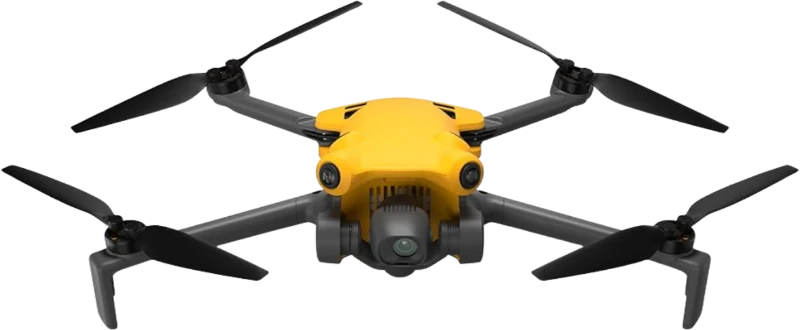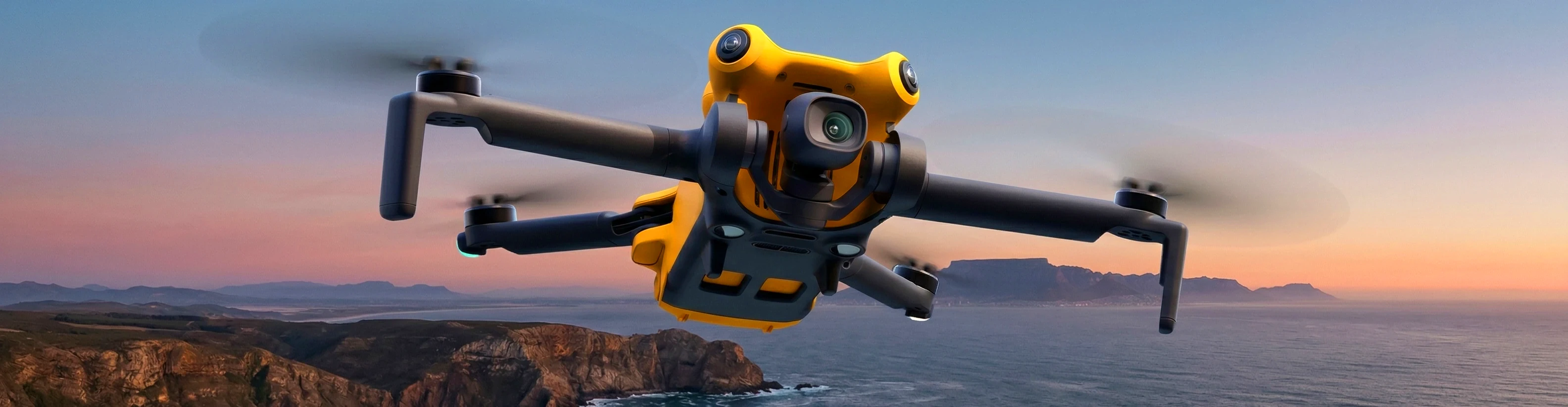
The Skyrover X1 is a 249 g sub-250g drone with a 1/1.32-inch CMOS, 4K HDR/60fps video, 4K/100fps slow-motion, true vertical capture and (uniquely at this price) 360 omnidirectional obstacle avoidance. App polish still trails DJI, but the X1 closes most of the gap to a Mini 4 Pro at roughly two-thirds the price, making it one of the best value sub-250g drones in 2026.
The Skyrover X1 is the flagship of the Skyrover line and its standout feature, 360 omnidirectional obstacle avoidance, is something you simply do not see in the budget-to-mid sub-250 g class. Most rivals either skip obstacle sensing entirely (like the Skyrover S1) or limit it to forward and downward (like the Antigravity A1). The X1 brings full omnidirectional sensing, a 1/1.32-inch CMOS sensor, 4K HDR video and AI subject tracking into a 249 g airframe at roughly USD 499, a spec sheet that goes head-to-head with the DJI Mini 4 Pro at roughly two-thirds the price.
The X1 carries a 1/1.32-inch CMOS sensor (9.98 x 7.5 mm), 48 megapixel stills and 4K HDR video at 60 fps. That sensor area is genuinely close to the DJI Mini 4 Pro's 1/1.3-inch chip, and HDR delivers more usable shadow and highlight detail than non-HDR mid-range competitors. Slow motion tops out at 4K/100fps, which is genuinely impressive at this price and gives editors meaningful room to ramp speed in post. True vertical video captures full-resolution 9:16 footage natively rather than cropping from 16:9, a real workflow win for TikTok, Reels and Shorts.
Flight time is rated at up to 32 minutes per battery in optimal conditions, with real-world flying typically delivering 24 to 27 usable minutes once you account for wind and Return-to-Home reserves. Transmission range is up to 15 km in optimal conditions, which is well beyond what FAA visual line-of-sight rules permit, the practical benefit is interference-resistant signal at legal ranges. Stable GPS holds position confidently, and intelligent Return-to-Home covers the safety basics.
360 omnidirectional obstacle avoidance is the headline feature, paired with AI subject tracking, waypoint flights and one-tap automated cinematic shots. Combined, these features make the X1 feel much closer to a DJI Mini 4 Pro than to a typical budget drone, single-pilot creators can plan complex moves and trust the airframe to dodge branches, lamp posts and other obstacles around it. Vertical video and a strong tracking pipeline make it especially well-suited to social-first creators.
Picking between these three comes down to where you sit on the price-to-features curve:
In the United States the X1's 249 g take-off weight qualifies it for the under-250 g recreational exemption, so hobby pilots do not need to register the airframe with the FAA. Commercial pilots flying under Part 107 still need a Remote Pilot Certificate regardless of weight, and Remote ID broadcasting is required for all flights. Confirm with Skyrover that your specific X1 ships with a compliant Remote ID broadcast module, or attach an external broadcast module if needed.
The Skyrover X1 is the right pick for content creators who want DJI Mini 4 Pro-level features without paying premium prices, social-first creators who want true vertical video, and anyone who values 360 obstacle avoidance for confident automated flying around buildings and vegetation. If you do not need obstacle avoidance and want longer flight time at lower cost, the cheaper Skyrover S1 is the smarter buy. If software polish and ecosystem maturity are paramount, step up to the DJI Mini 4 Pro or the DJI Mini 5 Pro.
The Skyrover X1 is one of the best value drones currently available. It offers nearly flagship-level features, especially 360 obstacle avoidance and true vertical video, at a mid-range price, making it a strong alternative to DJI for budget-conscious creators. Software polish remains the biggest gap, but for the asking price the X1's hardware-feature density is genuinely impressive.
The Skyrover X1 has a take-off weight of 249 g, so for purely recreational flight no FAA registration is required. Commercial use under FAA Part 107 and Remote ID broadcasting still apply, regardless of weight.
Skyrover rates the X1 at up to 32 minutes per battery in optimal conditions. In real-world flying with wind and active obstacle sensing, expect roughly 24 to 27 usable minutes per battery.
Yes. The X1 features 360 omnidirectional obstacle avoidance, which is unusual at this price point and one of the main reasons to choose it over the cheaper Skyrover S1 or other budget sub-250g drones without obstacle sensing.
Yes. The X1 supports true vertical video, which captures full-resolution 9:16 footage natively rather than cropping from a 16:9 source. That is a meaningful workflow improvement for TikTok, Reels and Shorts creators.
On hardware the X1 is competitive (1/1.32-inch CMOS, 4K HDR, 360 obstacle avoidance, 4K/100fps slow-mo, 15 km range), at a meaningfully lower price. The DJI Mini 4 Pro still leads on software polish, colour science and ecosystem maturity. For most creators the X1 closes about 80 percent of the gap at roughly two-thirds the price.
The X1 is typically priced around USD 499 for the standard kit. Bundles with extra batteries and a carry case usually represent good value given how much battery capacity an active session burns through.
| Name | Skyrover X1 |
| Gimbal | 3-axis |
| Sensor | 1/1.32-inch CMOS |
| Photos | 48 MP |
| Video | 4K / 60fps HDR |
 | |
| Sensor size | 1/1.3-inch (9.98 x 7.5 mm) |
| Slow Motion | 4K / 100fps |
| Weight | 249g |
| Flight Time | ~32 min |
| Range | Up to 15 km |
| Obstacle Avoidance | 360 Omnidirectional |
| Features | AI Tracking, Waypoints, Vertical Video |
| Release | 2025 |