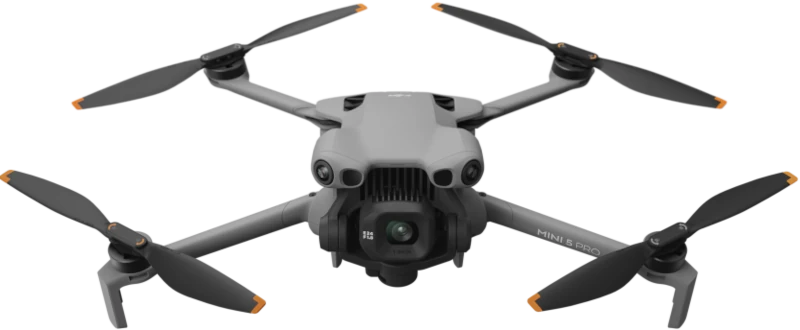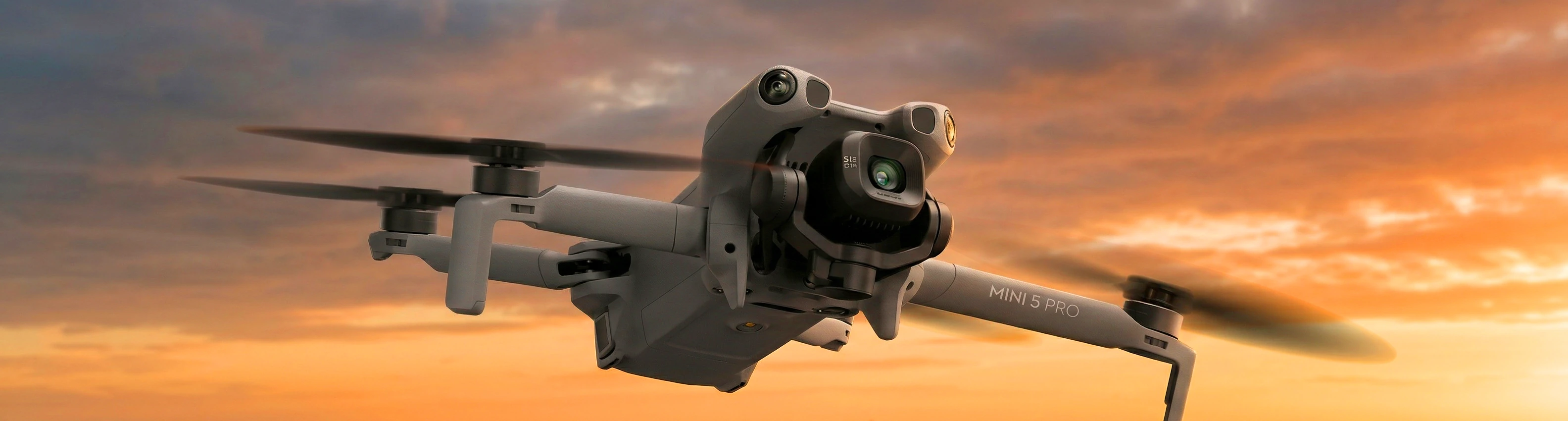
The DJI Mini 5 Pro pushes a true 1-inch CMOS, 4K/120 fps HDR video and ~40-minute flight time into a 249 g airframe. For travel creators and Part-107 commercial pilots who want the lightest possible kit, it is the most capable mini drone DJI has ever shipped, and the clearest reason yet to skip the larger Air-class models.
The DJI Mini 5 Pro is the first ultra-light drone to combine a 1-inch sensor with an under-250 g take-off weight, and that single fact reframes the category. Until now, pilots who wanted a 1-inch sensor had to step up to the Air or Mavic line and lose the regulatory advantages of sub-250 g operation. By keeping the Mini 5 Pro at 249 g, DJI lets recreational pilots in the US and most of Europe skip drone registration paperwork while still capturing footage that looks closer to a Mavic 3 than to the older Mini line. For travel creators and working freelancers who already own gimbals, ND filters and editing pipelines built around 4K, the Mini 5 Pro removes the last reason to pack a heavier airframe.
The headline upgrade is a 1-inch CMOS sensor with an f/1.8 aperture, roughly 2.4× the sensor area of the 1/1.3-inch chip in the Mini 4 Pro. In practice that translates into noticeably cleaner highlights, more usable shadow recovery, and significantly better low-light performance after sunset or in shaded canyons. Video tops out at 4K at 120 fps, giving smooth slow-motion that previously required an Air-class drone, and 48 MP stills handle moderate cropping without falling apart. The pipeline supports a flat colour profile with 10-bit recording, so editors get real grading headroom rather than the baked-in Rec.709 look common on entry-level mini drones.
Flight time is rated at up to 40 minutes per battery in optimal conditions; in real-world use with active obstacle sensing and moderate wind, plan on 30-34 usable minutes. Wind resistance sits at Beaufort level 5 (~10.7 m/s), which is enough for most coastal shoots but still demands judgement in alpine or canyon environments. The enhanced OcuSync transmission keeps the live feed clean at multi-kilometre ranges, and the airframe holds position more confidently than the Mini 4 Pro thanks to higher motor torque and updated propellers.
The Mini 5 Pro carries omnidirectional obstacle sensing (forward, backward, lateral, upward and downward) paired with the latest APAS routing and ActiveTrack subject following. Waypoint flights, MasterShots and intelligent panoramas are all supported, so single-pilot creators can plan complex moves without a second operator. GNSS pulls from GPS, Galileo and BeiDou simultaneously for fast lock and reliable Return-to-Home, and the airframe broadcasts Remote ID out of the box.
The Mini 4 Pro remains an excellent drone, especially at its current discounted price. The decision between the two comes down to image quality and slow-motion needs:
If you mostly shoot in good daylight at 4K/30-60 fps, the Mini 4 Pro still delivers professional-looking footage for a meaningful saving. If you shoot in mixed light, want 4K slow-motion or expect to grade in post, the Mini 5 Pro is the more future-proof buy. See our full DJI Mini 4 Pro review for a deeper comparison.
In the United States, the Mini 5 Pro qualifies for the under-250 g recreational exemption, so hobby flyers do not need to register the airframe with the FAA. Commercial pilots flying under Part 107 still need a Remote Pilot Certificate regardless of weight, and Remote ID broadcasting is required for all flights, the Mini 5 Pro broadcasts Remote ID natively, so no external module is needed. EU pilots can typically operate it in the A1 sub-category open to over-flight of uninvolved people, subject to local registration rules.
The Mini 5 Pro is the right pick for travel creators who want the lightest possible airframe in their carry-on, real-estate and event freelancers who need 4K slow-motion B-roll, and Part-107 pilots who want to keep paperwork simple while still delivering broadcast-grade footage. It is overkill for absolute beginners, a cheaper beginner mini makes more sense for first flights, but its automation makes it forgiving once you have logged a few hours.
The DJI Mini 5 Pro is the most powerful sub-250g drone on the market and a clear generational leap over the Mini 4 Pro. The 1-inch sensor, 4K/120 fps slow-motion and 40-minute flight time make it the first mini that can credibly replace an Air-class drone for most travel and freelance work. At ~$999 it is not cheap, but for anyone whose income or content quality depends on aerial footage, the upgrade is easy to justify.
For purely recreational flight no FAA registration is required as long as take-off weight stays under 250 g, which the Mini 5 Pro does. Commercial use under FAA Part 107 and Remote ID broadcasting still apply, regardless of weight.
DJI specifies up to about 40 minutes per battery in optimal conditions. In real-world use with wind and active obstacle sensing, expect roughly 30-34 minutes of usable flight time.
The Mini 5 Pro's larger 1-inch sensor and 4K/120 fps video are a meaningful step up for low-light and slow-motion work. If you mostly shoot in good light at 4K/60, the Mini 4 Pro is still very capable and a much cheaper option.
DJI rates the Mini 5 Pro for sustained winds typical of Beaufort 5 (about 10.7 m/s). Improved motor torque and updated propellers help it hold position in coastal or alpine conditions better than earlier Mini drones.
Yes, the Mini 5 Pro features omnidirectional obstacle sensing (forward, backward, lateral, upward and downward), which works with ActiveTrack and APAS to avoid collisions during automated shots.
Pricing starts around USD 999 for the standard kit. Fly More Combos with extra batteries, ND filters and a charging hub typically run several hundred dollars more.
| Name | DJI Mini 5 Pro |
| Gimbal | 3-axis |
| Image Sensor | 1-inch CMOS |
| Resolution | Up to 4K / 120fps |
 | |
| Sensor size | 1-inch (13.2 × 8.8 mm) |
| Photos | 48 MP |
| Aperture | f/1.8 |
| Weight | < 250g |
| Flight Time | ~40 min |
| Transmission | OcuSync (enhanced) |
| Obstacle Avoidance | Omnidirectional |
| GNSS | GPS, Galileo, BeiDou |
| Features | ActiveTrack, Waypoints, MasterShots |
| Release | 2025 |