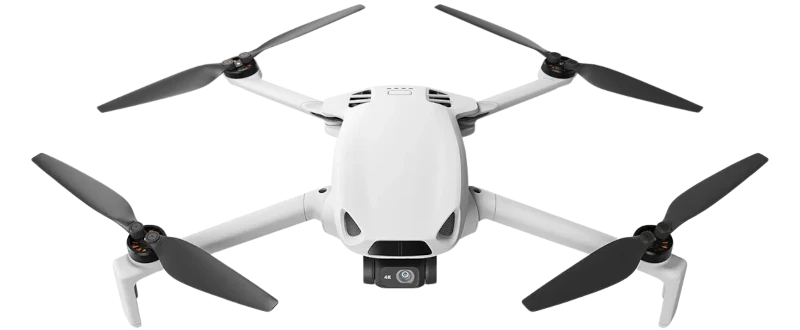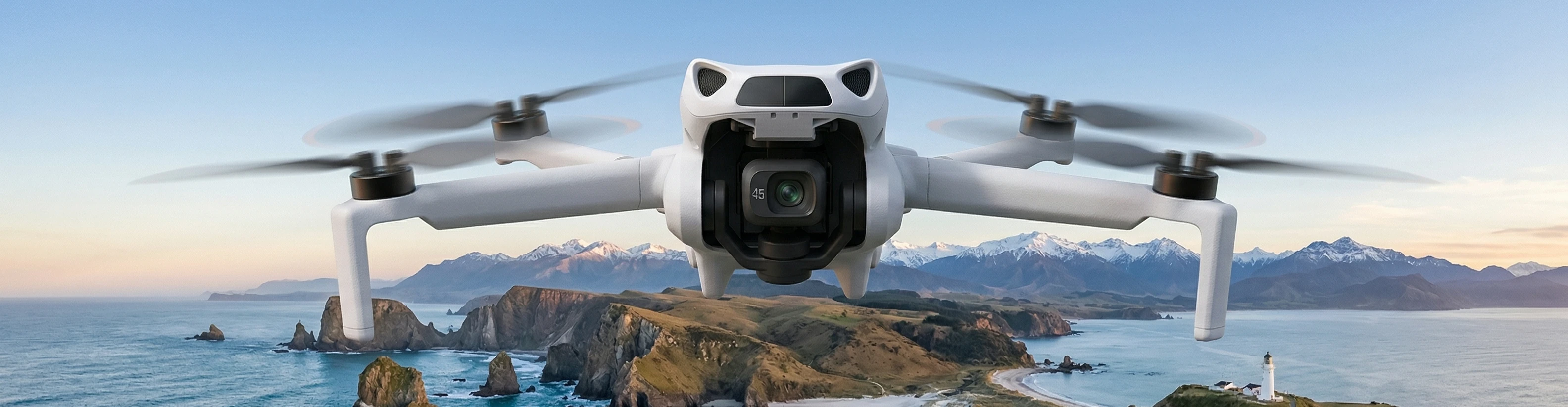
The Skyrover S1 is a 245 g sub-250g drone that pairs a 1/2-inch Sony CMOS with 4K/60fps video, a true 3-axis gimbal and an ambitious 40-minute flight time, all at a fraction of DJI Mini pricing. App polish and ActiveTrack reliability still trail DJI, but for budget-conscious creators and beginners who want real hardware specs without the premium tax, the S1 is one of the best value drones in 2026.
The Skyrover S1 is the latest entry from Skyrover, a brand line related to the HoverAir family of self-flying mini drones. It targets a very specific gap in the 2026 market: pilots who want DJI Mini-class hardware (1/2-inch Sony sensor, 4K/60fps, true 3-axis gimbal, 40-minute battery) without paying DJI Mini-class pricing. By keeping the airframe at 245 g, the S1 sits firmly under the FAA's 250 g recreational threshold, so hobby pilots in the United States skip drone registration entirely while still getting a hardware spec sheet that goes head-to-head with much pricier flagships.
The S1 carries a 1/2-inch Sony CMOS sensor (6.4 x 4.8 mm), 48 megapixel stills and 4K video at 60 fps. That sensor size is a meaningful step up from the 1/2.3-inch and 1/3-inch chips found in older budget drones, and it shows up most clearly in shadow detail and low-light footage. The 3-axis mechanical gimbal cleans up roll, pitch and yaw for genuinely smooth video without leaning on heavy electronic stabilisation. Image quality and colour science are not at the level of the DJI Mini 5 Pro, but they are convincingly close to a DJI Mini for most viewing.
Flight time is rated at up to 40 minutes per battery in optimal conditions, with real-world flying typically delivering 30 to 34 usable minutes once you account for wind and Return-to-Home reserves. Top speed is roughly 15 m/s, and wind resistance is rated at Level 5 (about 8 to 10.7 m/s), comparable with DJI Mini-class drones. Transmission range is up to 12 km in optimal conditions, which is well beyond what FAA visual line-of-sight rules allow anyway, the practical benefit is interference-resistant signal at legal ranges, not raw distance.
The S1 includes Auto Track for subject following, QuickShots for one-tap cinematic moves, panorama modes and one-tap takeoff and landing. GPS-assisted hover and intelligent Return-to-Home cover the essential safety features, with GPS plus Galileo GNSS for faster and more reliable position lock. Note there is no obstacle avoidance on the S1, if you need omnidirectional sensing at this price point look at the sibling Skyrover X1 instead.
The S1 is positioned squarely against DJI's Mini lineup. Picking between them comes down to what you value most:
In the United States the S1's 245 g take-off weight qualifies it for the under-250 g recreational exemption, so hobby pilots do not need to register the airframe with the FAA. Commercial pilots flying under Part 107 still need a Remote Pilot Certificate regardless of weight, and Remote ID broadcasting is required for all flights. Confirm with Skyrover that your specific S1 ships with a compliant Remote ID broadcast module, or attach an external broadcast module if needed.
The Skyrover S1 is the right pick for budget-conscious creators who want DJI Mini-class hardware without DJI Mini-class pricing, beginners stepping up from a toy-grade drone, and travel users who want a 4K/60fps camera in a registration-friendly weight class. It is not the right pick for working freelancers who need bulletproof software, omnidirectional obstacle sensing or a deep accessory ecosystem, that audience is better served by a DJI Mini 5 Pro.
The Skyrover S1 is one of the most credible value alternatives to a DJI Mini in 2026. The 1/2-inch Sony sensor, 3-axis gimbal, 4K/60fps video and 40-minute battery deliver a spec sheet that simply did not exist at this price two years ago. Software polish and the lack of obstacle avoidance are the obvious trade-offs, but for anyone whose budget tops out below USD 400, the S1 is hard to beat.
The Skyrover S1 has a take-off weight of 245 g, so for purely recreational flight no FAA registration is required. Commercial use under FAA Part 107 and Remote ID broadcasting still apply, regardless of weight.
Skyrover rates the S1 at up to 40 minutes per battery in optimal conditions. In real-world flying with wind and active stabilisation, expect roughly 30 to 34 usable minutes per battery.
On hardware, yes: 1/2-inch Sony CMOS, 4K/60fps, 3-axis gimbal and 40-minute flight time put it in DJI Mini territory. On software polish (app stability, colour science, ActiveTrack reliability) DJI is still ahead, but the Skyrover S1 closes most of the gap at a meaningfully lower price.
Wind resistance is rated at Level 5 (about 8 to 10.7 m/s), comparable with DJI Mini-class drones. That covers most coastal and lakeside conditions, alpine or strong gusty environments still demand caution.
Maximum transmission range is up to 12 km in optimal conditions. That is well beyond what FAA visual line-of-sight rules permit, so the practical benefit is interference-resistant signal at legal ranges, not raw distance.
The S1 is typically priced around USD 349 for the standard kit. Bundles with extra batteries and a carry case are usually only marginally more, and recommended given how quickly 40-minute batteries drain over a session.
| Name | Skyrover S1 |
| Gimbal | 3-axis |
| Sensor | 1/2-inch Sony CMOS |
| Photos | 48 MP |
| Video | 4K / 60fps |
 | |
| Sensor size | 1/2-inch (6.4 x 4.8 mm) |
| Weight | 245g |
| Flight Time | ~40 min |
| Range | Up to 12 km |
| Speed | ~15 m/s |
| Wind Resistance | Level 5 |
| Tracking | Auto Track |
| GNSS | GPS, Galileo |
| Release | 2025 |