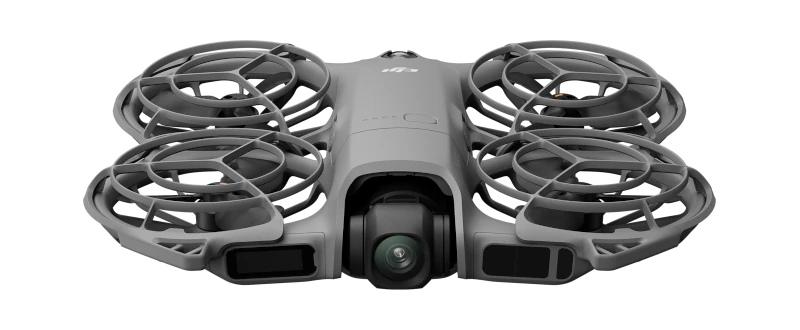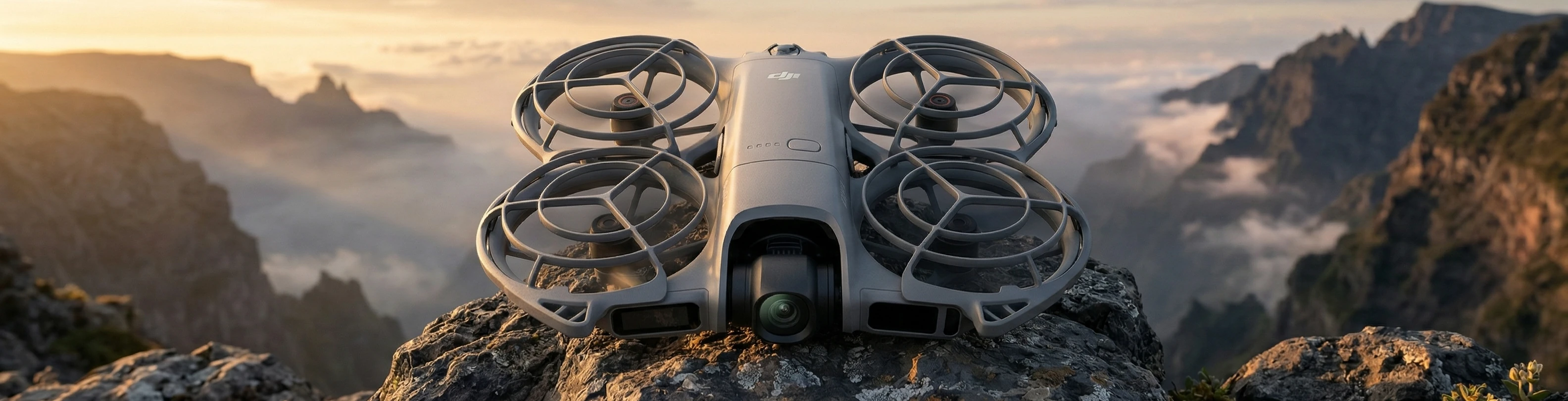
The DJI Neo 2 is the most polished palm-launch drone DJI has built. It keeps the 135 g sub-250g weight and full propeller cage of the original Neo, then adds 4K/60 fps capture, smarter AI subject tracking, and a longer 20-minute battery. For vloggers and TikTok creators who want a no-controller follow drone, it is the easiest USD 229 you can spend in 2026.
The DJI Neo 2 is built for a generation of creators that does not want to learn drone piloting. Like the original Neo, it ships as a tiny 135 g aircraft inside a full propeller cage, designed to launch from your palm with a tap on the DJI Fly app, a gesture, or a voice command. What sets the Neo 2 apart from its predecessor is the upgraded autonomy stack: the AI subject-tracking algorithm now keeps subjects in frame more reliably during running, cycling, and skating shots, and the camera can finally record at 4K/60 fps so the footage cuts cleanly into pro vlogs without slow-motion conform issues.
The Neo 2 carries a 1/2-inch CMOS sensor with a single-axis mechanical gimbal backed by EIS, and tops out at 4K resolution at 60 frames per second. Stills come in at 12 MP. That sensor size puts it on a par with the original Neo for low-light performance, but the 4K/60 capture, improved HDR, and refreshed image pipeline make a clear visual difference in daylight. Wide-angle framing keeps both you and your background in shot, exactly what social-first creators want, and the new colour profile cuts more cleanly with phone footage from an iPhone or Pixel.
Flight time is rated at around 20 minutes per battery in optimal conditions, a meaningful 10 percent step up from the original Neo. In real-world use with active subject tracking and breeze, plan on 16 to 18 minutes of usable flight. Like its predecessor the Neo 2 prioritises portability over endurance and storm-proofing, so save it for calm days. Downward vision sensors keep hover steady and handle palm catches, and Return-to-Home triggers automatically at low battery thanks to onboard GNSS.
Automation is the headline feature. AI subject tracking can lock onto a person and orbit, follow, or fly alongside them with no piloting required. Gesture control lets the Neo 2 respond to hand signals from across a room or trail, voice commands trigger take-off and landing, and a library of pre-programmed QuickShots delivers ready-to-post Reels and TikTok clips at the tap of a button. An optional remote controller and DJI goggles are also supported for pilots who want to switch from automated to FPV-style manual flight.
The Neo 2 is the obvious upgrade if you are buying new, but the original Neo remains a strong pick at clearance pricing. Quick differences:
If your shots involve fast subjects (running, biking, skating) the Neo 2 is worth the small premium. For static palm-launch selfies in good light, the original DJI Neo still gets the job done.
In the United States the DJI Neo 2 qualifies for the under-250 g recreational exemption (it is around 135 g), so hobby flyers do not need to register the airframe with the FAA. Commercial pilots flying under Part 107 still need a Remote Pilot Certificate regardless of weight, and Remote ID broadcasting applies to all flights. The Neo 2 broadcasts Remote ID natively. EU pilots can typically operate it in the A1 sub-category, subject to local registration rules.
The DJI Neo 2 is the right pick for vloggers who want hands-free follow shots, runners and cyclists who need an action drone that does not require a chase pilot, families who want a beginner-safe drone they can fly indoors near kids, and travel creators looking for the smallest possible aerial kit that still produces 4K/60 footage. Buyers who need cinematic image quality, low-light performance, or omnidirectional safety should step up to the Mini 4 Pro or Mini 5 Pro.
The DJI Neo 2 is the most accessible AI-driven camera drone of 2026. By keeping the 135 g palm-launch concept and layering on 4K/60 fps capture, smarter tracking, and a longer battery, DJI has built the obvious upgrade path from the original Neo. At USD 229 it remains one of the cheapest ways to get pro-looking aerial footage of yourself, with no controller, no piloting skill, and no FAA paperwork required for recreational use.
No FAA registration is required for purely recreational flight because the DJI Neo 2 weighs around 135 g, well under the 250 g threshold. Pilots flying commercially under Part 107 still need a Remote Pilot Certificate, and Remote ID broadcasting rules apply to all aircraft regardless of weight.
Yes, the Neo 2 is designed to fly using the DJI Fly app, gesture control, voice commands, or fully autonomous AI subject tracking. A dedicated remote controller is optional and recommended only for pilots who want full manual control.
The Neo 2 keeps the same 135 g palm-launch design but upgrades video to 4K/60 fps, improves AI subject tracking, and extends flight time to about 20 minutes per battery. The original Neo records 4K/30 fps and flies for around 18 minutes.
DJI rates the Neo 2 at about 20 minutes per battery in optimal conditions. Real-world use with active subject tracking and breeze typically delivers 16 to 18 minutes of usable flight time.
The Neo 2 has downward vision sensors for stable hover and assisted landing, paired with a propeller cage that protects the rotors during palm launch. It does not include the omnidirectional sensing found on the Mini 4 Pro or Mini 5 Pro.
The Neo 2 is best for casual creators, vloggers and TikTok users who want hands-free follow shots at the lowest possible price and with zero learning curve. Buyers who need cinematic image quality, low-light performance, or omnidirectional safety should step up to the Mini 4 Pro or Mini 5 Pro.
| Name | DJI Neo 2 |
| Gimbal | Single-axis + EIS |
| Sensor | 1/2-inch CMOS |
| Video | 4K / 60fps |
 | |
| Sensor size | 1/2-inch (6.4 × 4.8 mm) |
| Photos | 12 MP |
| Weight | ~135g |
| Flight Time | ~20 min |
| Control | App / Gesture / Optional Remote |
| Obstacle Avoidance | Downward sensors |
| Tracking | AI Subject Tracking |
| Release | 2025 |