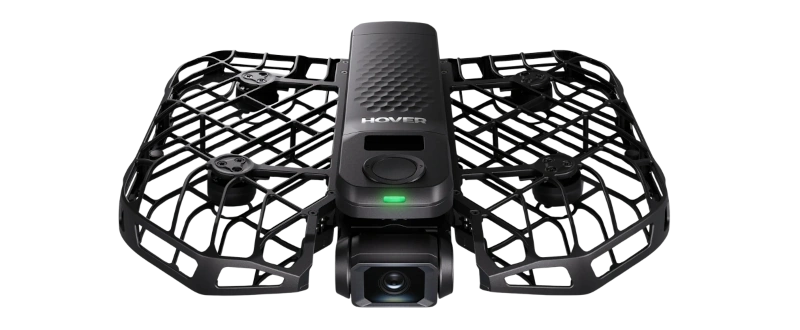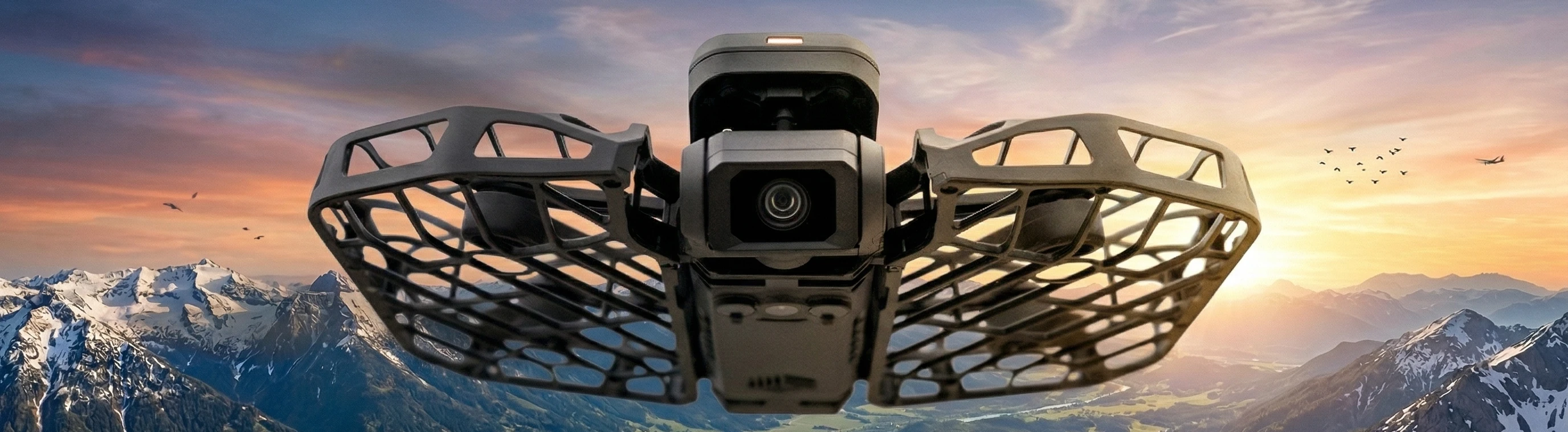
The HOVERAir X1 Pro is the X1 idea grown up: a 192 g caged self-flying drone with a real 1/1.3-inch sensor, 4K/60 fps video and a 17 m/s top speed that can finally chase bikes and skis. It still operates without a controller and stays under the 250 g threshold, making it the best HOVERAir to recommend to action-sports vloggers in 2026.
The HOVERAir X1 Pro takes the safe, controller-free, palm-launched concept of the original X1 and rebuilds it around a much more serious camera and a far more capable airframe. With a 1/1.3-inch sensor, 4K/60 fps recording and a 17 m/s top speed it is no longer just a selfie toy, it is a credible action camera that flies. Crucially it still ships with the fully enclosed propeller cage that made the X1 family famous, so you keep all the safety benefits of caged props while getting roughly triple the performance envelope.
The bigger 1/1.3-inch CMOS sensor is the headline upgrade. It delivers 4K/60 fps video, 12 MP stills, an f/2.55 aperture, a 16 mm equivalent focal length and an ISO range of 100 to 12800. The wide 104° field of view keeps the subject framed even when you are riding a sharp line, and the bigger sensor handles overcast skies and shaded forest much better than the original X1. The 2-axis mechanical gimbal plus electronic stabilisation produces broadcast-quality cuts straight out of the camera at 60 fps.
Flight time is rated at 16 minutes per 1920 mAh battery, top speed climbs to 17 m/s (~61 km/h) and wind resistance moves up to Beaufort level 5 thanks to bigger motors and revised aerodynamics. Transmission distance is now 0.5 km (0.31 mi), which is still much shorter than a traditional camera drone but is enough to give you breathing room when you launch a follow shot. In real-world tracking with quick repositioning, plan on 12 to 14 useful minutes per pack.
The X1 Pro carries the same controller-free palm-launch workflow with autonomous Hover, Follow, Zoom Out, Orbit, Bird's Eye and Dolly modes. There is no GNSS, the drone navigates with vision-inertial odometry, which is excellent in textured outdoor scenes and weaker over snow, glass-flat water or open sky. The 192 g cage still lets you fly safely close to faces, hands and pets, which is a genuine differentiator versus exposed-prop competitors.
If you already own an X1 the upgrade is significant. Compared head to head:
The original HOVERAir X1 remains a great pick for casual selfie content. The Pro is the one to buy for action sports and serious vlogging.
At 192 g the X1 Pro stays under the 250 g recreational threshold in the United States, so hobby pilots are not required to register the airframe with the FAA. Commercial pilots flying under Part 107 still need a Remote Pilot Certificate, and Remote ID rules apply when flying in regulated airspace. EU pilots can typically operate it in the A1 open sub-category subject to local registration rules.
The HOVERAir X1 Pro is the right pick for road and mountain bikers, skiers and trail runners who want hands-free aerial coverage of themselves, vloggers who film themselves walking and talking through cities, and travellers who want a sub-250 g drone with much better image quality than the original X1. It is also a strong gift for content-first creators who do not want to learn manual sticks. For a more traditional camera drone, see our best vlogging drone roundup.
The HOVERAir X1 Pro is the most well-rounded caged self-flying drone on the market. It keeps the original X1's standout safety story, fixes its biggest weaknesses (slow speed, small sensor, low resolution), and still slips under the 250 g threshold. For action vloggers it is the easiest aerial camera money can buy in 2026.
The X1 Pro upgrades the sensor to 1/1.3-inch, lifts video to 4K at 60fps, raises top speed from 6.7 to 17 m/s, extends flight time from 11 to 16 minutes per battery, and improves wind resistance to Beaufort level 5. It is heavier at 192 g but still well below the 250 g registration threshold.
Yes. Like the rest of the X1 family, the Pro is launched from your palm and runs preset flight modes (Hover, Follow, Zoom Out, Orbit and others) autonomously. A controller is sold separately for manual flying, but most users never need it.
Its 17 m/s top speed is roughly 61 km/h or 38 mph, which is fast enough to follow road biking, downhill skiing and most trail running. The wide 104-degree field of view also keeps the subject framed even during sharp direction changes.
Up to 16 minutes per 1920 mAh battery in still air. With wind, fast tracking and frequent direction changes, expect about 12 to 14 useful minutes per pack.
No. The X1 Pro relies on visual-inertial odometry (VIO) instead of GNSS to hold position. That works very well in most outdoor and indoor scenes with visual texture, but it is less reliable over flat snow, calm water or featureless surfaces.
For US recreational flight no FAA registration is required because the X1 Pro weighs 192 g, well under the 250 g threshold. Commercial Part 107 operations and Remote ID rules still apply when flying in regulated airspace.
| Name | HOVERAir X1 Pro |
| Gimbal | 2-axis |
| Image Sensor | 1/1.3-inch CMOS |
| FOV | 104° |
| Effective Pixels | 12 MP |
| Equivalent Focal Length | 16 mm |
| Aperture | f/2.55 |
| Video Resolution | 4K/60fps |
 | |
| Sensor size | 1/1.3-inch (9.98 x 7.5 mm) |
| ISO Range | 100 ~ 12800 |
| Weight | 192g / 6.8oz |
| Width | 173mm / 6.8-inch |
| Release date | 2024-11-01 |
| Drone Price | USD 499 to 1,469 |
| Battery | 1920 mAh |
| Max Transmission Distance | 0.5 km (0.31 mi) |
| Wind Speed Resistance | Level 5 |
| Flight Time | 16 min. |
| Max Speed | 17 m/s |
| GNSS | No GNSS |
| Features | Follow-Me |