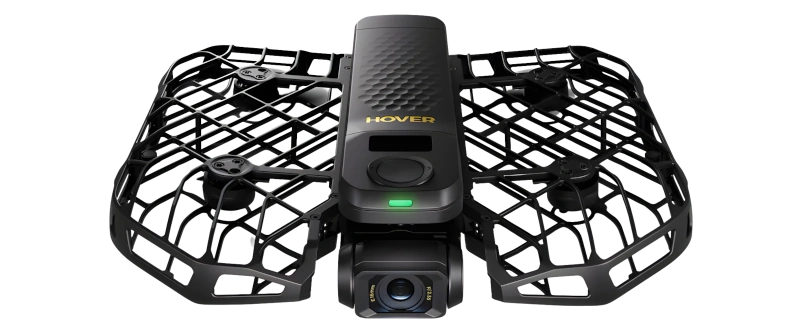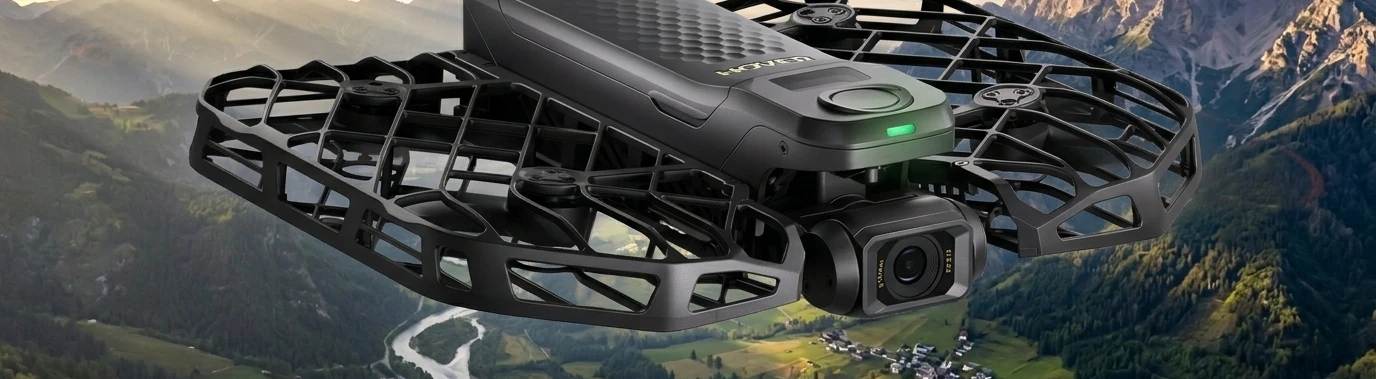
The HOVERAir X1 Pro MAX is the most capable caged self-flying drone you can buy. It keeps the X1 Pro's 1/1.3-inch sensor and 17 m/s top speed, then adds 4K/120 fps slow-motion, 48 MP stills and obstacle detection in a 193 g airframe. If you want the best HOVERAir for serious content creation, this is it.
The HOVERAir X1 Pro MAX is the highest-end version of the caged self-flying drone family. It carries the same 192 g class airframe and palm-launch workflow as the X1 Pro but adds three meaningful upgrades: a 48 MP photo mode, 4K/120 fps slow-motion video and active obstacle detection. The combination puts it at the very top of any 2026 shortlist for action vloggers who want the safest, most automated aerial camera money can buy without crossing the 250 g registration threshold.
The same 1/1.3-inch CMOS as the X1 Pro is now driven harder. Stills jump to 48 MP for cleaner crops and printable Instagram covers, while video peaks at 4K/120 fps for buttery 4x slow-motion in a 30 fps timeline. The lens is a wide 16 mm equivalent at f/2.55 with a 107° field of view, and ISO ranges from 100 to 12800. The 2-axis mechanical gimbal plus electronic stabilisation keeps the slow-motion clips remarkably steady, even when you are running underneath the drone.
Flight performance mirrors the X1 Pro: 16 minutes per 1920 mAh battery, top speed of 17 m/s, wind resistance up to Beaufort level 5 and 0.5 km transmission range. Real-world tracking with quick repositioning and slow-motion capture trims usable flight time to about 12 to 14 minutes per pack. The wider lens and obstacle detection make it noticeably less stressful to fly through tighter scenes than the X1 Pro.
The MAX adds optical obstacle detection on top of the same Hover, Follow, Zoom Out, Orbit, Bird's Eye and Manual modes that ship across the X1 family. Obstacle detection is conservative by design, the drone slows or stops rather than re-routing aggressively, but in practice it dramatically reduces the chance of clipping a tree or fence post during a fast follow shot. Combined with the propeller cage, it is the most forgiving caged drone we have ever flown.
The choice between the X1 Pro and the X1 Pro MAX comes down to whether you actually use the new features:
Heavy slow-motion users, photographers and pilots who fly in cluttered environments will want the MAX. If you mostly shoot 4K/60 follow shots in open spaces, the cheaper X1 Pro is excellent value.
At 193 g the X1 Pro MAX still slips under the 250 g recreational threshold in the United States, so hobby pilots are not required to register the airframe with the FAA. Commercial pilots flying under Part 107 still need a Remote Pilot Certificate, and Remote ID rules apply when flying in regulated airspace. EU pilots can typically operate it in the A1 open sub-category subject to local registration.
The HOVERAir X1 Pro MAX is the right pick for serious action vloggers, social-media creators who lean heavily on slow-motion and cropable stills, and anyone who wants a self-flying drone with extra collision insurance for tight environments. It is overkill for casual selfie shooters, the smaller and cheaper HOVERAir X1 covers them better. For more vlogging-friendly options see our best vlogging drone roundup.
The HOVERAir X1 Pro MAX is the best caged self-flying drone on the market in 2026, full stop. It does everything the X1 Pro does, then layers on slow-motion, high-resolution stills and active obstacle detection. For action-focused content creators it is the easiest premium aerial camera money can buy.
The MAX uses the same caged airframe but adds 48 MP stills (vs 12 MP), 4K/120fps slow-motion (vs 4K/60), a slightly wider 107-degree field of view and obstacle detection. Weight is essentially identical at 193 g vs 192 g, both stay below the 250 g registration threshold.
Yes, the Pro MAX records 4K at up to 120fps for smooth slow-motion playback at 4x speed in a 30fps timeline. This is a class-leading slow-motion spec for any sub-250 g drone, not just self-flying ones.
The X1 Pro MAX adds optical obstacle detection on top of the X1 Pro's vision-based positioning. It can sense objects in its flight path and stop or reroute during automated tracking modes, which dramatically reduces the risk of clipping a tree branch when following a moving subject.
No. Like the rest of the X1 family it launches from your palm and runs preset modes (Hover, Follow, Zoom Out, Orbit, Bird's Eye and others) autonomously. A separate beacon and controller are sold for manual flying and longer range tracking, but they are optional.
If you shoot a lot of slow-motion content, want better stills for thumbnails or social posts, or fly close to trees and obstacles, the MAX is a clear upgrade. If you mostly capture 4K/60 follow shots in open areas, the X1 Pro is excellent value and saves you several hundred dollars.
For US recreational flight, no. At 193 g the X1 Pro MAX is below the 250 g threshold so hobby pilots do not need to register the airframe with the FAA. Commercial Part 107 operations and Remote ID rules still apply when flying in regulated airspace.
| Name | HOVERAir X1 Pro MAX |
| Gimbal | 2-axis |
| Image Sensor | 1/1.3-inch CMOS |
| FOV | 107° |
| Effective Pixels | 48 MP |
| Equivalent Focal Length | 16 mm |
| Aperture | f/2.55 |
| Video Resolution | 4K/120fps |
 | |
| Sensor size | 1/1.3-inch (9.98 x 7.5 mm) |
| ISO Range | 100 ~ 12800 |
| Weight | 193g / 6.8oz |
| Width | 173mm / 6.8-inch |
| Release date | 2024-11-01 |
| Drone Price | USD 699 to 1,669 |
| Battery | 1920 mAh |
| Max Transmission Distance | 0.5 km (0.31 mi) |
| Wind Speed Resistance | Level 5 |
| Flight Time | 16 min. |
| Max Speed | 17 m/s |
| GNSS | No GNSS |
| Features | Follow-Me, Obstacle detection |