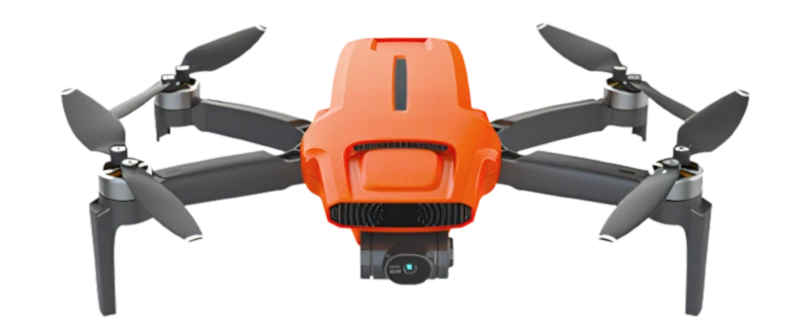
The FIMI Mini 3 packs a 1/2-inch 48MP sensor, 4K/60 fps video, a real 3-axis gimbal and a 32-minute flight time into a 245 g airframe, then prices it well below the equivalent DJI Mini. It is the right pick for travelers and content creators who want most of the headline DJI Mini features without paying DJI money, provided you can live with a slightly less polished app.
The FIMI Mini 3 is one of the most aggressive sub-250 g value plays on the market. By keeping take-off weight at 245 g, FIMI lets US recreational pilots skip FAA airframe registration entirely, while still shipping a folding airframe with a true 3-axis mechanical gimbal, 4K/60fps capture and a 9 km transmission link. For travelers, vloggers and beginner creators who do not want to spend DJI Mini 4 Pro money, the Mini 3 hits a sweet spot of weight, image quality and price that very few rivals match in 2026.
The headline sensor is a 1/2-inch CMOS at 48 MP behind a bright f/1.6 aperture and a 24 mm equivalent focal length. Video tops out at 4K/60fps, with a wide ISO range up to 26500 that gives reasonable dusk and dawn flexibility for a drone of this size. The 3-axis gimbal keeps footage usable even in moderate breeze, and the 9-element lens construction holds up well against highlight flare on bright water and snow. Stills are 48 MP, so social and small-print crops survive without falling apart, although you should not expect 1-inch sensor dynamic range.
FIMI rates the Mini 3 at up to 32 minutes per battery in optimal conditions; in real-world flying with wind, ActiveTrack and gimbal moves you should plan on 24 to 27 useful minutes per pack. Top speed sits at 18 m/s in sport mode, and wind resistance is rated to Beaufort Level 5 (about 8 to 10 m/s). Transmission distance reaches up to 9.0 km (5.59 mi) line-of-sight under FCC conditions, which is plenty for any legal visual line-of-sight flight in the US or EU.
Smart shooting modes cover QuickShots, panoramas, hyperlapse, waypoints and subject tracking, so single-pilot creators can capture cinematic moves without a second operator. GNSS pulls from GPS, GLONASS, BeiDou and Galileo for fast lock and reliable Return-to-Home. Note that the Mini 3 uses downward visual and ultrasonic sensing rather than full multi-directional obstacle avoidance, so it rewards careful planning and clear take-off zones more than DJI Mini 4 Pro class drones do.
The Mini 3 lines up most directly against the DJI Mini 3 / Mini 3 Pro and the newer Mini 4 generation. Key differences:
If you do paid client work or need rock-solid app stability, DJI is still the safer choice. If you are flying for personal travel content or learning aerial photography on a budget, the FIMI Mini 3 hands you about 80 percent of the experience for around 50 percent of the spend. See our best value drones round-up for the broader budget picture.
In the United States the Mini 3 qualifies for the under-250 g recreational exemption, so hobby flyers do not need to register the airframe with the FAA (TRUST test still applies). Commercial pilots flying under FAA Part 107 need a Remote Pilot Certificate regardless of weight, and Remote ID broadcasting is required for all flights, recreational or commercial. EU pilots can typically operate the Mini 3 in the A1 sub-category subject to local registration of the operator.
The FIMI Mini 3 is the right pick for travel creators on a tight budget, beginners who want a 4K capable airframe to learn on without sinking USD 800 into a DJI Mini 4 Pro, and content creators in markets where DJI distribution is patchy. It is not the right choice for pros who depend on aerial work for income (those buyers should look at our best pro drones list) or pilots who want active obstacle avoidance.
The FIMI Mini 3 delivers a startling amount of drone for the money: real 3-axis stabilisation, 4K/60fps video, 32-minute batteries and a 9 km link in a sub-250 g airframe. If you can accept slightly rougher software and the absence of multi-directional obstacle sensors, it is one of the best-value sub-250 g drones of 2026 and a clear recommendation for budget-conscious travel creators.
For purely recreational flight no FAA registration is required as long as take-off weight stays under 250 g, which the Mini 3 does at 245 g. Commercial use under FAA Part 107 and Remote ID broadcasting still apply, regardless of weight.
FIMI rates the Mini 3 at up to 32 minutes per battery in optimal conditions. In real-world use with wind and active filming, plan on roughly 24 to 27 usable minutes per pack.
The FIMI Mini 3 lands at a noticeably lower price than the DJI Mini 3 while matching it on weight, 4K capture and 3-axis stabilisation. DJI generally still wins on app polish, OcuSync transmission stability and accessory ecosystem, while FIMI wins on raw value.
FIMI rates the Mini 3 for Beaufort Level 5 winds (around 8 to 10 m/s). At 245 g it is still a light airframe, so coastal and ridge-line shoots demand judgement and a careful eye on the wind forecast.
The Mini 3 uses downward visual and ultrasonic sensing for safe take-off and landing, but does not feature multi-directional obstacle avoidance like a DJI Mini 4 Pro. Treat it as a careful-piloting platform rather than a fully autonomous one.
Street pricing typically runs from about USD 299 for the standard kit up to USD 350 for combo bundles with extra batteries. Sale pricing on Amazon and AliExpress can drop the airframe under USD 280.
| Name | FIMI Mini 3 |
| Gimbal | 3-axis |
| Image Sensor | 1/2-inch CMOS |
| FOV | 79° |
| Effective Pixels | 48 MP |
| Equivalent Focal Length | 24 mm |
| Aperture | f1.6 |
| Video Resolution | 4K/60fps |
 | |
| Sensor size | 1/2-inch (6.4 × 4.8 mm) |
| ISO Range | 100 to 26500 |
| Weight | 245g / 8.6oz |
| Width | 200mm / 7.9-inch |
| Release date | 2024-04-01 |
| Drone Price | USD 299 to 350 |
| Battery | 2200 mAh |
| Max Transmission Distance | 9.0 km (5.59 mi) |
| Wind Speed Resistance | Level 5 |
| Flight Time | 32 min. |
| Max Speed | 18 m/s |
| GNSS | GPS, GLONASS, BeiDou, Galileo |
| Features | Waypoints, Hyperlapse, Follow-Me |