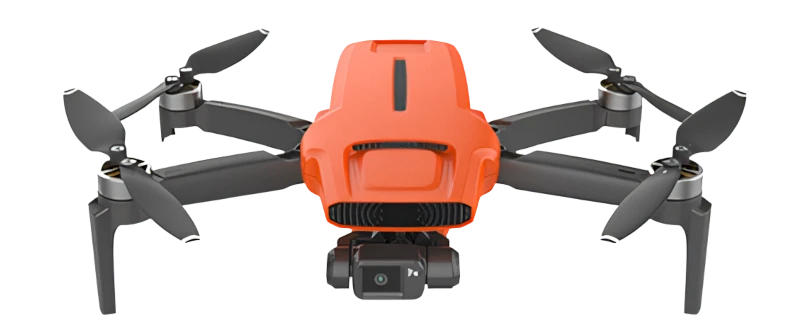
The FIMI Mini 3 SE is a stripped-down sub-250 g beginner drone with a 1/2.5-inch 12 MP sensor, 4K/30 fps video, a 2-axis gimbal and a 29-minute flight time, sold for around USD 229. It is the right pick if you want to learn aerial photography without spending DJI money, and a wrong fit if you need cinematic 4K/60 or a full 3-axis gimbal (look at the standard FIMI Mini 3 instead).
The Mini 3 SE is FIMI's value champion: by trimming the standard Mini 3's sensor, gimbal axis count and aperture, it lands at one of the lowest prices for any 4K capable, GPS-equipped sub-250 g drone in 2026. Take-off weight of 245 g keeps it inside the FAA recreational exemption in the US, so first-time buyers can put it in the air the day it arrives without an FAA airframe registration. For anyone who wants to learn aerial flight on a real GPS-stabilised platform without risking an USD 800 DJI Mini 4 Pro on their first crash, it is hard to beat.
The Mini 3 SE uses a 1/2.5-inch CMOS sensor at 12 MP behind an f/2.2 lens with a 20 mm equivalent focal length and a 94-degree field of view. Video tops out at 4K/30fps, with 12 MP stills. ISO range is 100 to 6400, narrower than the standard Mini 3, so low-light shooting after sunset gets noisy quickly. Stabilisation comes from a 2-axis mechanical gimbal supplemented by EIS, which is enough to deliver clean shots in calm conditions, but cannot match the smoothness of the 3-axis FIMI Mini 3 when there is wind on the airframe.
FIMI rates the Mini 3 SE at up to 29 minutes per battery in optimal conditions; in real-world use plan on 22 to 25 useful minutes. Top speed sits at 16 m/s and wind resistance is rated to Beaufort Level 5 (around 8 to 10 m/s). The transmission link reaches up to 9.0 km (5.59 mi) under FCC rules, more than enough headroom for any legal visual line-of-sight flight.
Smart shooting modes include QuickShots, hyperlapse, panoramas, waypoints and Follow-Me subject tracking, all controlled via the FIMI Navi smartphone app. Safety relies on quad-GNSS positioning (GPS, GLONASS, BeiDou and Galileo) plus downward sensors for take-off and landing. Like the standard Mini 3 there is no multi-directional obstacle avoidance, so first-time pilots should fly in open spaces and use beginner mode while building hours.
Three drones get cross-shopped at this price tier:
If image quality matters even a little, jump to the standard FIMI Mini 3 for the larger sensor, brighter f/1.6 lens and 3-axis gimbal. If you mostly fly for fun and want the cheapest stable airframe, the Mini 3 SE is the sensible choice.
The Mini 3 SE qualifies for the under-250 g FAA recreational exemption in the United States, so hobby flyers do not need to register the airframe (TRUST test still applies). Commercial flights under FAA Part 107 require a Remote Pilot Certificate regardless of weight, and Remote ID broadcasting is mandatory for all flights. EU pilots can typically operate it in the A1 sub-category subject to local operator registration.
The Mini 3 SE is built for absolute beginners, gift buyers and travelers who want a real GPS-stabilised drone for under USD 250. It is also a sensible second drone for hobbyists who want a cheap pack-along airframe to fly in environments where they would not dare risk a high-end DJI. It is not for pros, paid creators or anyone who needs cinematic slow-motion (see the best pro drones list).
For around USD 229, the FIMI Mini 3 SE delivers a stable GPS-locked sub-250 g drone with 4K capture, a 9 km link and a 29-minute battery. The 2-axis gimbal and small sensor mean it cannot match the standard Mini 3's image quality, but as a learn-to-fly platform or a no-stress travel drone it is one of the best value picks of 2026.
For purely recreational flight no FAA registration is required as long as take-off weight stays under 250 g, which the Mini 3 SE does at 245 g. Commercial use under FAA Part 107 and Remote ID broadcasting still apply, regardless of weight.
The standard Mini 3 has a larger 1/2-inch 48 MP sensor, an f/1.6 lens, 4K/60fps video and a real 3-axis gimbal. The SE drops to a 1/2.5-inch 12 MP sensor, f/2.2 lens, 4K/30fps and a 2-axis gimbal in exchange for a noticeably lower price.
FIMI rates the Mini 3 SE at up to 29 minutes per battery in optimal conditions. In real-world flying with wind and active filming, plan on roughly 22 to 25 usable minutes per pack.
Yes, the Mini 3 SE is one of the most beginner-friendly sub-250 g drones. The lower price tag, GPS-assisted hover, Return-to-Home and simple FIMI Navi app make it forgiving for a first-time pilot, although the 2-axis gimbal limits cinematic flexibility.
Yes, the Mini 3 SE records 4K video at 30fps. It does not offer the higher 4K/60fps frame rate of the standard Mini 3, so smooth slow-motion in 4K is not available.
Street pricing typically runs from about USD 229 for the standard kit up to USD 249 for combo bundles. It is one of the cheapest 4K capable sub-250 g drones available globally.
| Name | FIMI Mini 3 SE |
| Gimbal | 2-axis |
| Image Sensor | 1/2.5-inch CMOS |
| FOV | 94° |
| Effective Pixels | 12 MP |
| Equivalent Focal Length | 20 mm |
| Aperture | f2.2 |
| Video Resolution | 4K/30fps |
 | |
| Sensor size | 1/2.5-inch (5.76 × 4.29 mm) |
| ISO Range | 100 to 6400 |
| Weight | 245g / 8.6oz |
| Width | 200mm / 7.9-inch |
| Release date | 2024-10-01 |
| Drone Price | USD 229 to 249 |
| Battery | 2200 mAh |
| Max Transmission Distance | 9.0 km (5.59 mi) |
| Wind Speed Resistance | Level 5 |
| Flight Time | 29 min. |
| Max Speed | 16 m/s |
| GNSS | GPS, GLONASS, BeiDou, Galileo |
| Features | Waypoints, Hyperlapse, Follow-Me |