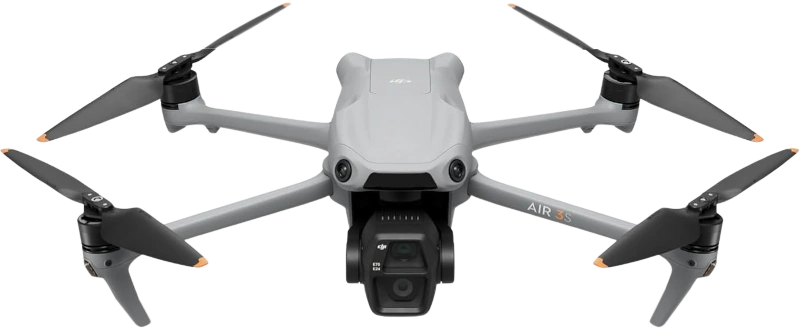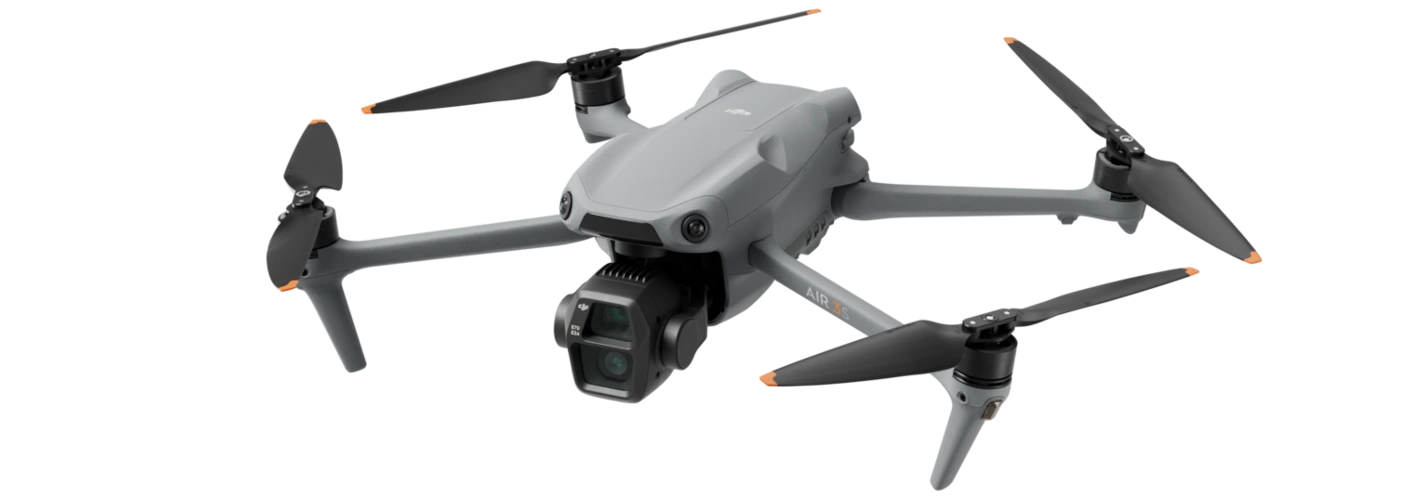
The DJI Air 3S takes the dual-camera Air 3 platform and upgrades the wide angle to a true 1-inch CMOS with 14 stops of dynamic range, adds forward LiDAR for low-light obstacle sensing and stretches the link to 32 km O4+. For prosumer creators who want Mavic 3 image quality at a meaningfully lower price, it is the most versatile mid-range drone DJI sells.
The Air 3S is the version of the Air series most working creators will want. It keeps the 70mm 3x telephoto that made the Air 3 so versatile, but pairs it with a brand new 1-inch wide-angle sensor capable of 14 stops of dynamic range. That single change closes most of the imaging gap to the Mavic 3 line while keeping the airframe compact and the kit price several hundred dollars lower. Add forward LiDAR, a 32 km O4+ link and 45 minutes of flight, and the Air 3S becomes the default recommendation for prosumer pilots who do not need a Hasselblad badge but do need professional-grade results.
The headline upgrade is the 1-inch CMOS on the wide camera, with 14 stops of dynamic range, dual native ISO and full support for 10-bit D-Log M and HLG colour pipelines. In practice that means cleaner highlights at sunset, far more usable shadow recovery and noticeably better noise performance after dusk than the dual 1/1.3-inch setup on the Air 3. The 70mm telephoto remains the same 1/1.3-inch sensor, which is fine, the wide does the heavy lifting and the tele is mostly used for compression and reach. Video tops out at 4K/120 fps HDR on the wide, with full slow-motion options, and 50 MP stills give plenty of room to crop.
Flight time is rated at 45 minutes per pack from the 4276 mAh battery, with real-world sessions usually delivering 34 to 37 usable minutes once wind, recording and obstacle sensing are factored in. The 724 g airframe handles winds up to about 12 m/s (Beaufort 6), which is enough for most coastal and ridge-line shoots. The new O4+ transmission link reaches 32 km in FCC regions and feels rock solid through urban interference thanks to the four-antenna setup and improved error correction.
The standout safety addition is the front-facing LiDAR module, which measures distance to obstacles directly even in low light or featureless environments where vision-based sensors struggle. Combined with the existing omnidirectional vision system and APAS 5.0, it makes night and dusk work considerably safer. ActiveTrack 360, MasterShots, QuickShots and free-route waypoints are all supported, and Subject Focusing keeps the wide camera locked onto people and vehicles even at long range. Remote ID broadcasts natively for U.S. compliance.
The choice between the two Air variants is straightforward:
If your budget allows it and you ever shoot at dusk or grade in post, the Air 3S is the clear pick. The original Air 3 remains an excellent value choice if you only ever fly in good daylight.
At 724 g the DJI Air 3S sits well above the 250 g recreational exemption, so all U.S. pilots must register the airframe with the FAA DroneZone before the first flight, even for hobby use. Commercial pilots flying under Part 107 additionally need a Remote Pilot Certificate. Remote ID broadcasting is mandatory for all U.S. flights, and the Air 3S transmits Remote ID natively. EU pilots can typically operate the Air 3S in the C1 transition class with appropriate Open category sub-categories.
The Air 3S is the right pick for prosumer creators and Part-107 freelancers who need the best dual-camera image quality outside the Mavic 3 line, real-estate and tourism shooters who use the 70mm tele daily, and pilots who genuinely fly at dawn or dusk where the LiDAR sensor pays off. Beginners are usually better served by a cheaper beginner drone first; pixel-peepers chasing the absolute best aerial stills should look at the Mavic 3 Pro.
The DJI Air 3S is the best version of the Air platform DJI has shipped and the most balanced prosumer drone on sale in 2026. The 1-inch wide sensor, 14-stop dynamic range, forward LiDAR and 32 km link justify the upcharge over the Air 3 for anyone making a living with the footage. If you want Mavic 3 quality without the Mavic price tag, this is the drone to buy.
Yes. At 724 g the Air 3S is well above the 250 g recreational exemption, so all U.S. pilots must register the airframe with the FAA, even for hobby flights. Remote ID broadcasting is required, and commercial use requires a Part 107 Remote Pilot Certificate.
DJI rates the Air 3S at up to 45 minutes per battery in optimal conditions. With wind, recording and active obstacle sensing, expect roughly 34 to 37 usable minutes per pack in real-world flights.
The Air 3S upgrades the wide camera to a 1-inch CMOS with 14 stops of dynamic range, adds forward LiDAR for low-light avoidance, and extends the link to 32 km O4+. If image quality and night operation matter, the Air 3S is the clear pick; if you mostly shoot in daylight on a budget, the Air 3 saves several hundred dollars.
DJI rates the Air 3S for sustained winds up to about 12 m/s (Beaufort 6). The 724 g airframe holds position confidently in coastal and ridge-line conditions, comparable to the Air 3.
The forward LiDAR module measures distance to obstacles ahead even in low light or featureless scenes where vision sensors struggle. Combined with omnidirectional vision and APAS, it makes night and dusk flying considerably safer than on previous Air models.
Pricing typically runs from about USD 1,399 for the standard kit with the DJI RC-N3 controller up to roughly USD 1,799 for Fly More Combos with the RC 2 screen controller, extra batteries and a charging hub.
| Release | August 2024 |
| Weight | 724 g |
| Camera Sensor | 1" + 1/1.3" CMOS |
| Video Resolution | 4K/120fps |
| Flight Time | 45 min |
| Max Range | 32 km (O4+) |
| Battery | 4276 mAh |
| Price (MSRP) | USD $1,399 to $1,799 |