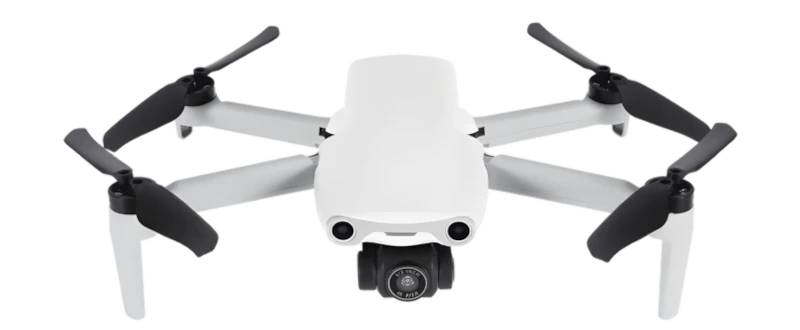
The Autel EVO Nano was the first credible 249 g challenger to the DJI Mini line, and even years after release it still earns a place in the conversation. A 3-axis gimbal, 48 MP stills, 28-minute flight time and a long 17 km transmission link make it a strong travel pick for buyers who prefer Autel's interface and warranty over DJI's.
The Autel EVO Nano was launched as the first non-DJI sub-250g folding drone with the same 3-axis gimbal layout, smart flight modes, and long transmission range that buyers expected from a Mini. By landing right at the 249 g registration threshold, it gave US recreational pilots a way to skip FAA paperwork while picking a brand outside the dominant DJI ecosystem. Even now in 2026, it remains a go-to recommendation for travellers who want a serious mini drone with bright orange visibility, a friendly app, and Autel's longer transmission link.
The EVO Nano carries a 1/2-inch CMOS sensor with a fixed f/2.8 lens, 23 mm equivalent focal length and an 85-degree field of view. Stills are captured at 48 MP using pixel-binning, and video tops out at 4K at 30 fps with FullHD 60 fps for smoother panning shots. ISO range is 100 to 6400. The 3-axis mechanical gimbal does the heavy lifting on stabilisation, delivering footage that holds up well against the older DJI Mini 3 and Mini 2 SE in good light, and the colour science leans warmer than DJI's by default.
Flight time is rated at 28 minutes per battery, which translates to 22 to 25 usable minutes once you factor in breeze and active flight modes. Top speed is 15 m/s and Autel certifies wind resistance up to Beaufort level 5 (~10.7 m/s), enough for most coastal and open-park work but not for serious alpine or storm flying. Where the EVO Nano really pulls ahead of older DJI Minis is transmission: a stated 17 km (10.56 mi) link comfortably beats the OcuSync 2 link on most legacy DJI sub-250g drones.
The EVO Nano carries multi-directional obstacle sensors paired with subject tracking, hyperlapse, panorama and a full set of QuickShot-style automated routines. GNSS pulls from GPS, GLONASS and Galileo for fast lock and reliable Return-to-Home. The bright orange airframe is a deliberate visibility choice that helps you keep eyes on the drone in patchy backgrounds, and the propellers fold neatly for travel.
The Nano and Nano+ share the same airframe and flight system. The key difference is the camera sensor:
If you regularly shoot at dusk or want better grading headroom, step up to the Autel EVO Nano+. If most of your flying is in good daylight, the standard Nano gets you most of the way for less.
In the United States the Autel EVO Nano qualifies for the under-250 g recreational exemption (it weighs exactly 249 g), so hobby flyers do not need to register the airframe with the FAA. Commercial pilots flying under Part 107 still need a Remote Pilot Certificate regardless of weight, and Remote ID broadcasting applies to all flights. Confirm that your specific EVO Nano firmware supports native Remote ID broadcast or that you are flying with an external module where required. EU pilots can typically operate it in the A1 sub-category.
The Autel EVO Nano is the right pick for travellers who want a sub-250g drone outside the DJI ecosystem, hobbyists who value the brighter orange visibility on long-range shots, and creators who want a 3-axis gimbal and 48 MP stills without paying Mini 4 Pro money. It is not the best choice for buyers who prioritise 4K/60 slow-motion or omnidirectional safety, those should look at the DJI Mini 5 Pro or the Autel EVO Nano+ with its larger sensor.
Years after launch the Autel EVO Nano still holds up as a serious sub-250g travel drone, especially when discounted. It misses the very latest sensor and transmission tech that the DJI Mini 5 Pro brings, but its combination of weight, range, gimbal quality and brand-alternative appeal keeps it relevant in 2026. For pilots who want to step outside the DJI ecosystem without giving up on quality, it is still an easy recommendation.
For purely recreational flight no FAA registration is required as long as take-off weight stays under 250 g, which the Autel EVO Nano does at exactly 249 g. Commercial use under FAA Part 107 still requires a Remote Pilot Certificate, and Remote ID broadcasting applies to all flights.
The EVO Nano matches the DJI Mini range on weight (249 g) and gimbal layout (3-axis), and beats most Mini models on transmission range (17 km vs 10 km for older Mini drones). The DJI Mini 4 Pro and Mini 5 Pro fight back with newer sensors, omnidirectional sensing and higher frame rates.
Autel rates the EVO Nano at 28 minutes per battery in optimal conditions. In real-world use with breeze and active obstacle sensing, plan for 22 to 25 minutes of usable flight time.
Autel rates the EVO Nano for wind resistance up to Beaufort level 5, around 10.7 m/s. That is enough for most coastal and open-park shoots, but cliff-side or alpine work in higher gusts is best avoided.
Yes, the EVO Nano includes multi-directional obstacle sensors that work with intelligent flight modes such as subject tracking, hyperlapse and panorama. It does not match the omnidirectional 360-degree coverage of the latest DJI Mini 5 Pro.
Pricing typically sits around USD 549 for the standard kit, with Premium bundles including extra batteries and ND filters running higher. Discounts are common at major retailers, particularly during seasonal sales.
| Name | AUTEL EVO Nano |
| Gimbal | 3-axis |
| Image Sensor | 1/2-inch CMOS |
| FOV | 85° |
| Effective Pixels | 48 MP |
| Equivalent Focal Length | 23 mm |
| Aperture | f/2.8 |
| Video Resolution | 4K/30fps FullHD/60fps |
 | |
| Sensor size | 1/2-inch (6.4 × 4.8 mm) |
| ISO Range | 100 ~ 6400 |
| Weight | 249g / 8.8oz |
| Width | 210mm / 8.3-inch |
| Release date | 2020-11-01 |
| Battery | 2250 mAh |
| Max Transmission Distance | 17.0 km (10.56 mi) |
| Wind Speed Resistance | Level 5 |
| Flight Time | 28 min. |
| Max Speed | 15 m/s |
| GNSS | GPS, GLONASS, Galileo |
| Features | Hyperlapse, Follow-Me, Obstacle detection |