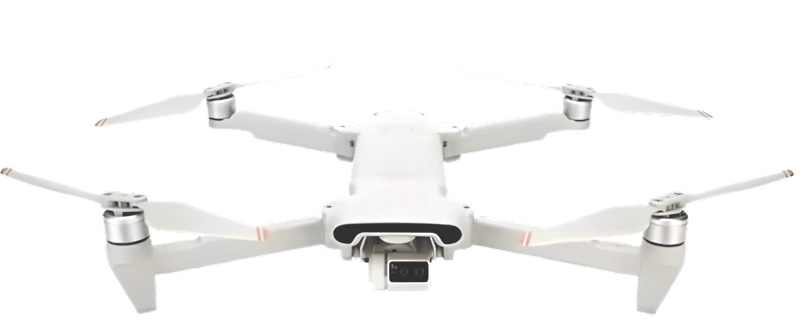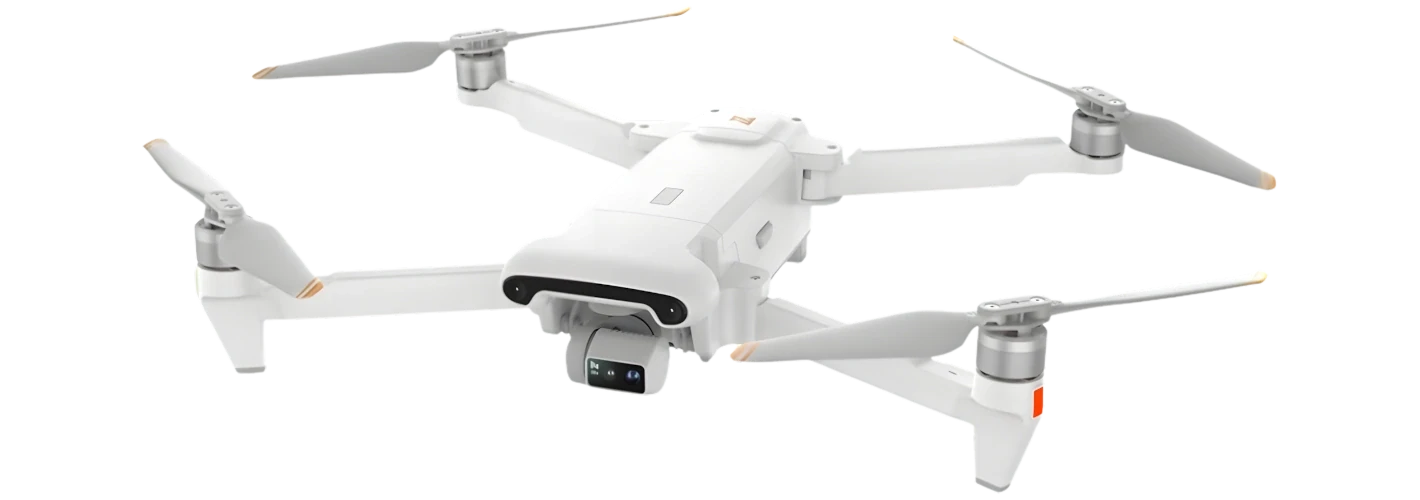
The FIMI X8 Tele pairs a 1/2-inch wide sensor with a 1/2.5-inch telephoto sensor, giving you 6x zoom flexibility, 4K/60 fps capture, a 3-axis gimbal, a 35-minute battery and a 10 km link in a 780 g airframe, all from around USD 459. It is the cheapest way into a dual-camera prosumer drone in 2026 and a credible budget alternative to the DJI Air 3 if you can live with FIMI's software.
The X8 Tele is FIMI's first stab at a true dual-camera prosumer drone. By stacking a 1/2-inch wide sensor on top of a 1/2.5-inch telephoto sensor, it lets pilots switch between an establishing wide and a tight telephoto frame in a way that previously required a USD 1000+ DJI Air 3 or Mavic 3 Pro. Combined with 4K/60fps capture, 35-minute batteries, a 10 km transmission link and a sub-USD-500 starting price, it is arguably the best-value dual-camera drone in 2026.
The X8 Tele runs two CMOS sensors: a 1/2-inch main module for wide shots and a 1/2.5-inch telephoto module for compression and subject isolation. Together they deliver up to 6x digital zoom and 4K video at 60fps. The 3-axis mechanical gimbal keeps both lenses smooth even in moderate wind. Image quality is good for the price tier, but does not match a 1-inch sensor like the DJI Mini 5 Pro: stick to good light or accept some noise after sunset. The telephoto module is genuinely useful for landscape compression, real-estate close-ups and wildlife from a respectful distance.
Flight time is rated at up to 35 minutes per battery, with 27 to 30 useful minutes likely in real-world flying. The 780 g airframe handles wind better than the FIMI Mini line and gives a confident, planted hover. Transmission tops out at 10 km under FCC conditions, which is plenty of headroom for any legal visual line-of-sight flight in the US or EU.
Smart shooting modes cover waypoints, hyperlapse, panoramas, automated cinematic moves and Follow-Me subject tracking, all controlled via the FIMI Navi app. GNSS uses GPS, GLONASS, BeiDou and Galileo for fast lock and reliable Return-to-Home. Note that obstacle sensing on the X8 Tele is limited compared to the X8 Pro, so use beginner mode and clear airspace when learning the dual-camera workflow.
The two prosumer dual-camera drones get cross-shopped constantly:
The DJI Air 3 wins on absolute image quality, transmission stability and flight time, but costs more than twice as much. The FIMI X8 Tele wins on price, full stop. If you are a working freelancer, save up for the Air 3. If you are a budget-conscious creator who wants real telephoto framing in your aerial work, the X8 Tele is the clear pick.
At 780 g the X8 Tele is well above the 250 g recreational exemption. All US pilots must register the airframe with the FAA, recreational flyers must complete the TRUST test, and commercial pilots flying under FAA Part 107 need a Remote Pilot Certificate. Remote ID broadcasting is mandatory for all flights regardless of weight. EU pilots will typically operate the X8 Tele in the A2 or A3 sub-categories depending on certification labelling and proximity to people.
The FIMI X8 Tele is the right pick for budget-conscious creators who want telephoto compression without paying DJI Air 3 money, real-estate freelancers who need both a wide establishing shot and a tighter property close-up, and travel content creators who can absorb the heavier 780 g airframe. It is not the right choice for pilots who need omnidirectional obstacle avoidance or rock-solid OcuSync transmission for paid client work, see the best pro drones list for that tier.
For around USD 459, the FIMI X8 Tele is the cheapest path into a true dual-camera prosumer drone in 2026. The image quality ceiling is below the DJI Air 3 and obstacle sensing is limited, but the wide + tele lens combo, 4K/60fps capture, 35-minute battery and 10 km link make it a remarkable value pick for budget-conscious creators who want telephoto flexibility in their aerial workflow.
Yes. At 780 g the FIMI X8 Tele is well above the 250 g recreational exemption, so all US pilots must register the airframe with the FAA, complete the TRUST test for recreational use, or hold a Remote Pilot Certificate under Part 107 for commercial work. Remote ID broadcast is also required.
FIMI rates the X8 Tele at up to 35 minutes per battery in optimal conditions on the 5000 mAh pack. Real-world flying with wind, gimbal moves and zoom shots typically lands in the 27 to 30 minute range.
The X8 Tele pairs a 1/2-inch wide-angle main sensor with a 1/2.5-inch telephoto sensor, giving you a wider establishing shot from the main lens and a tighter telephoto framing for compression and subject isolation, with up to 6x digital zoom across the two.
The X8 Tele lands well below the DJI Air 3 on price (around USD 459 vs USD 1099+) and offers a similar dual-camera concept. DJI still wins on overall image quality, OcuSync transmission stability and obstacle avoidance, but the FIMI is the most affordable way to get a dual-camera prosumer drone in 2026.
FIMI specifies up to 10 km transmission range under FCC conditions. As always, real-world legal flight in the US and EU is limited to visual line-of-sight, well inside that figure.
Street pricing typically starts from about USD 459 for the standard kit, with combo bundles featuring extra batteries and the smart controller running higher. Sale pricing on Amazon and AliExpress can drop the airframe further.
| Name | FIMI X8 Tele |
| Release | August 2024 |
| Weight | 780 g |
| Camera Sensors | 1/2" wide + 1/2.5" tele CMOS |
| Gimbal | 3-axis mechanical |
| Video Resolution | 4K/60fps |
| Zoom | 6x digital |
| Flight Time | 35 min |
| Max Transmission | Up to 10 km |
| Battery | 5000 mAh |
| Price (street) | From USD 459 |