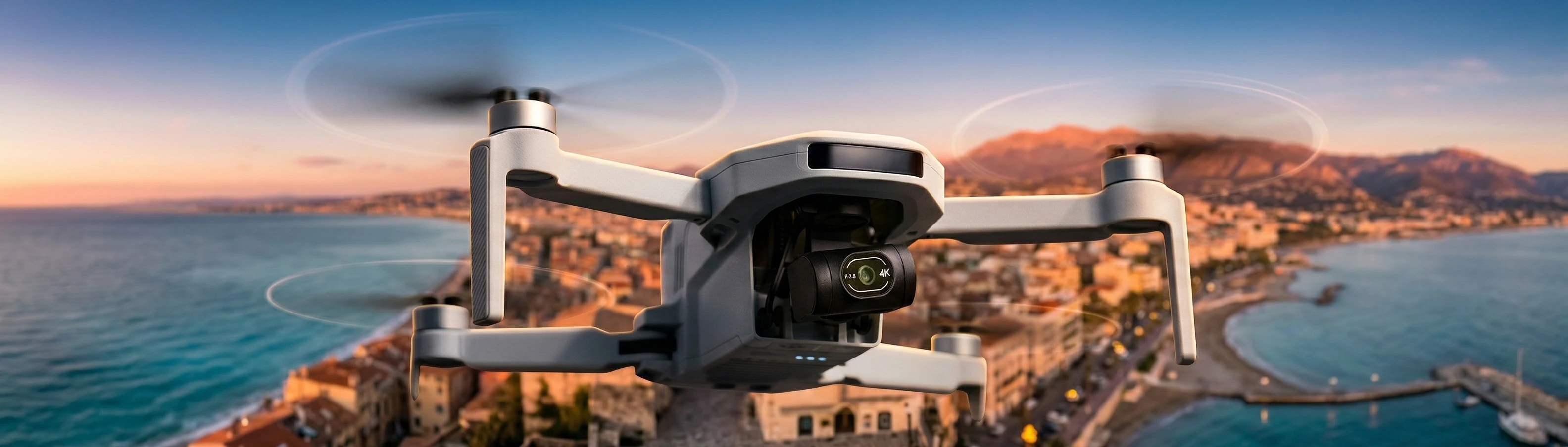
The Potensic ATOM 4K is the most credible budget alternative to a DJI Mini in 2026: a 249 g sub-250 g GPS drone with a 3-axis mechanical gimbal, 4K/30 fps video, 32-minute flight time and 6 km transmission, all for around USD 270. Camera processing and the app are clearly behind DJI, but for hobby pilots the value is hard to beat.
The Potensic ATOM 4K answers a single question very well: what is the cheapest serious sub-250 g GPS drone you can buy? With a 249 g take-off weight, full GNSS positioning, automatic Return-to-Home, a 3-axis mechanical gimbal and a 32-minute flight time on paper, it ticks all the boxes that used to belong exclusively to the DJI Mini line, but at roughly half the price. For first-time pilots, second-drone backup pilots and anyone who does not want to put a DJI on a windy beach, the ATOM 4K is the obvious value pick.
The ATOM 4K uses a 1/3-inch CMOS sensor with an f/2.2 lens and a 78° field of view, recording up to 4K/30 fps and 12 MP stills. The 3-axis mechanical gimbal is the headline feature here, very few drones at this price step up from electronic-only stabilisation, and it is what separates the ATOM from $150 toy 4K drones. In good daylight footage looks crisp and well-stabilised. Low-light, dynamic range and colour science are visibly behind a DJI Mini, the smaller sensor and simpler image pipeline show their limits the moment the sun drops.
Flight time is rated at 32 minutes per 2230 mAh battery, top speed is 16 m/s and wind resistance is rated at Beaufort level 5. Transmission distance is 6.0 km (3.73 mi) on paper, in practice you should treat that as the maximum line-of-sight number. Real-world flights pull cleanly at a few hundred metres and the live feed runs at 720p. The airframe is composed in moderate gusts, and Return-to-Home triggers reliably on low battery or signal loss thanks to GPS, GLONASS, BeiDou and Galileo support.
For a drone at this price, the feature list is generous: Waypoints, Follow-Me, GPS positioning, automatic Return-to-Home and a small selection of automated shots in the Potensic app. There is no obstacle avoidance, so you do still have to fly it like an adult, but Beginner mode caps speed and altitude for first flights. The app is functional rather than polished, expect occasional reconnections and a UI that does not feel as refined as DJI Fly.
The decision between the ATOM 4K and a DJI Mini drone usually comes down to budget vs polish:
For 4x the budget you get noticeably better images, more reliable transmission and a much smoother app. For a quarter of the price, you get most of the same hardware fundamentals, which is genuinely impressive.
In the United States the ATOM 4K weighs 249 g, just under the 250 g recreational threshold, so hobby pilots are not required to register the airframe with the FAA. Commercial operations under Part 107 still require a Remote Pilot Certificate, and Remote ID rules apply when flying in regulated airspace. Always confirm local rules before flying.
The ATOM 4K is the right pick for first-time pilots who want serious hardware (3-axis gimbal, GPS, RTH) without spending DJI money, students and travellers who would rather risk a $270 drone than a $760 one over water, and anyone who wants a backup airframe in their kit. It is the wrong pick for serious creators who depend on image quality and app stability. For more options see our best drone for the money roundup.
The Potensic ATOM 4K is the best value sub-250 g GPS drone we know of in 2026. It will not replace a DJI Mini for serious creators, but for hobby flying it delivers most of the meaningful features, 3-axis stabilisation, GPS, Return-to-Home, 4K, 32-minute flights, at a price that makes it a no-brainer first drone or backup body.
For purely recreational flight no FAA registration is required because the ATOM 4K weighs 249 g, just under the 250 g threshold. Commercial use under FAA Part 107 still requires a Remote Pilot Certificate, and Remote ID rules apply when flying in regulated airspace.
The ATOM 4K matches a DJI Mini on the headline hardware (3-axis gimbal, 4K video, GPS, 32-min flight, sub-250 g weight) but at roughly half the price. Where DJI pulls ahead is camera processing, low-light performance, app stability and OcuSync transmission, the ATOM uses a smaller 1/3-inch sensor and a less polished mobile app.
Potensic specifies up to 32 minutes per 2230 mAh battery. In real flying with wind and recording, expect roughly 25 to 28 useful minutes per pack. A Fly More Combo with extra batteries is highly recommended.
Yes. The ATOM 4K supports GPS, GLONASS, BeiDou and Galileo positioning, plus automatic Return-to-Home in case of low battery or signal loss. It also supports Waypoints and Follow-Me modes.
It is rated for Beaufort level 5 wind (about 8.0 to 10.7 m/s), which is good for a sub-250 g drone. Like all mini drones, it is still a good idea to land early on coastal or alpine days when gusts pick up.
Pricing typically starts around USD 270 for the standard kit and runs up to about USD 410 for the Fly More combo with extra batteries and a charging hub.
| Name | Potensic ATOM 4K |
| Gimbal | 3-axis |
| Image Sensor | 1/3-inch CMOS |
| FOV | 78° |
| Effective Pixels | 12 MP |
| Aperture | f/2.2 |
| Video Resolution | 4K/30fps |
 | |
| Sensor size | 1/3-inch (4.8 x 3.6 mm) |
| Live-Feed | 720P |
| ISO Range | 100 ~ 6400 |
| Weight | 249g / 8.8oz |
| Width | 210mm / 8.3-inch |
| Release date | 2023-08-01 |
| Drone Price | USD 270 to 410 |
| Battery | 2230 mAh |
| Max Transmission Distance | 6.0 km (3.73 mi) |
| Wind Speed Resistance | Level 5 |
| Flight Time | 32 min. |
| Max Speed | 16 m/s |
| GNSS | GPS, GLONASS, BeiDou, Galileo |
| Features | Waypoints, Follow-Me |

