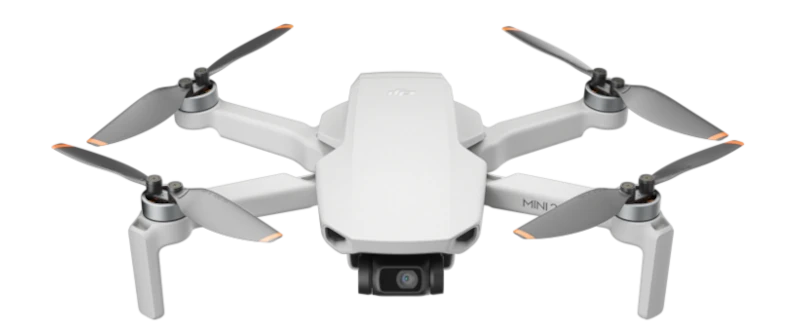
The DJI Mini 4K is the cheapest current DJI airframe that captures real 4K/30 fps video, in a 238 g body that skips US recreational FAA registration. Think of it as the Mini 2 SE upgraded with 4K capture, a longer 10 km transmission link and native Remote ID. For first-time pilots and travelers who want true 4K on a budget, this is the easiest entry ticket.
The DJI Mini 4K is essentially the airframe and gimbal of the well-loved Mini 2 / 2 SE re-skinned around a sensor and processing pipeline that finally delivers true 4K capture. At 238 g it stays comfortably under the FAA recreational registration threshold (the lightest current DJI airframe), so hobby flyers in the US and most of Europe can fly without paperwork. The big leap over the Mini 2 SE is video resolution: this is the cheapest way to put 4K aerial footage into your edit timeline with a DJI body, which alone justifies the small price premium for new pilots who plan to upload to YouTube.
The camera pairs a 1/2.3-inch CMOS sensor with a 24 mm equivalent f/2.8 lens and a true 3-axis mechanical gimbal. Stills are 12 MP and video tops out at 4K/30 fps with bitrates that hold up well in good daylight. There is no HDR profile and no D-Cinelike option, so colour science is baked in and grading headroom is limited, but for travel reels, social uploads and basic family content it looks clean and natural straight out of the camera. Low-light performance is limited by the small sensor, treat the Mini 4K as a daylight tool.
Flight time is rated at up to 31 minutes per battery in optimal conditions; in real-world use with light wind plan on 24 to 27 useful minutes. Top speed in Sport mode is 18 m/s and wind resistance sits at Beaufort Level 5 (about 10.7 m/s), enough for most coastal travel shoots. The standout flight upgrade over the Mini 2 SE is the OcuSync transmission link, which now keeps a clean live feed out to 10 km in clear conditions, a meaningful improvement that helps the Mini 4K hold a stable signal even in slightly congested urban environments.
One-tap creative tools include QuickShots (Dronie, Helix, Rocket, Circle, Boomerang) and 180/sphere panoramas. There is no ActiveTrack, MasterShots or APAS routing on the Mini 4K, those features are reserved for Pro-class drones. Crucially there are also no forward, backward or lateral obstacle sensors, so flying in tight environments is on the pilot. A downward vision system handles stable hovering and precise landing. Remote ID is broadcast natively, which is one of the underrated upgrades over earlier sub-$300 DJI airframes.
The Mini 4K and Mini 2 SE share the same 1/2.3-inch sensor class and the same airframe lineage. The decision usually comes down to whether you need 4K and the longer transmission link:
If you already own a Mini 2 or Mini 2 SE, the Mini 4K is not a meaningful upgrade beyond the 4K capture. If you are buying your first DJI drone, the Mini 4K is the cleaner pick. See our full DJI Mini 2 SE review for the alternative.
In the United States, the Mini 4K qualifies for the under-250 g recreational exemption at just 238 g, so hobby flyers do not have to register the airframe with the FAA. Commercial pilots flying under Part 107 still need a Remote Pilot Certificate regardless of weight. Remote ID is broadcast natively from the Mini 4K, so no external module is required for compliant outdoor flights, an important upgrade over earlier sub-$300 DJI drones that needed a separate broadcast device. EU pilots can typically operate the Mini 4K in the A1 sub-category subject to local registration of the operator.
The Mini 4K is the right pick for first-time drone pilots who want true 4K on day one, weekend travelers buying a single airframe to live in a backpack, and parents looking for a sub-$300 DJI for shared family use. It is also a sensible cheap second body for content creators who already own a Pro-class drone and want a backup that can ship via mail. It is not the right tool for low-light filmmakers, ActiveTrack-heavy creators or anyone planning to fly in obstacle-rich environments. For those use cases, look at the Mini 3 or jump straight to the Mini 4 Pro.
The DJI Mini 4K is the easiest sub-$300 4K drone recommendation in 2026. It does not have the sensor or the smart features of the Pro Mini line, but it nails the basics: a true 3-axis gimbal, real 4K capture, OcuSync transmission to 10 km and Remote ID built in, all under 250 g. For first-time pilots, this is the obvious starting line.
For purely recreational flight no FAA registration is required as long as take-off weight stays under 250 g, which the Mini 4K does at just 238 g. Commercial flights under FAA Part 107 still require registration regardless of weight, and Remote ID rules apply to most outdoor flights.
DJI rates the Mini 4K at up to 31 minutes per battery in optimal conditions. With moderate wind and active flying, expect roughly 24 to 27 minutes of usable flight time per pack.
The Mini 4K bumps video resolution to true 4K/30fps, extends transmission to 10 km via the newer OcuSync link and broadcasts Remote ID natively. The Mini 2 SE is older but cheaper on discount and squeezes a slightly longer 34-minute flight time, so it remains an option for tight budgets.
DJI rates the Mini 4K for Level 5 winds (about 10.7 m/s). It holds position confidently in moderate breezes and is generally fine for coastal travel shoots, though gusty alpine conditions still demand caution given the light airframe.
No, the Mini 4K does not include forward, backward or lateral obstacle sensors. It does have a downward vision system for stable hovering and precise landing, so visual flying discipline is required.
Pricing typically runs from around USD 249 for the standard kit to USD 449 for the Fly More Combo with extra batteries, propellers and a charging hub. That makes it the cheapest current DJI 4K drone.
| Name | DJI Mini 4K |
| Gimbal | 3-axis |
| Image Sensor | 1/2.3-inch CMOS |
| FOV | 83° |
| Effective Pixels | 12 MP |
| Equivalent Focal Length | 24 mm |
| Aperture | f/2.8 |
| Video Resolution | 4K/30fps |
 | |
| Sensor size | 1/2.3-inch (6.17 x 4.55 mm) |
| Live-Feed | 720p/30fps |
| ISO Range | 100 to 3200 |
| Weight | 238g / 8.4oz |
| Width | 203mm / 8-inch |
| Release date | 2024-04-01 |
| Drone Price | USD 249 to 449 |
| Battery | 2250 mAh |
| Max Transmission Distance | 10.0 km (6.21 mi) |
| Wind Speed Resistance | Level 5 |
| Flight Time | 31 min. |
| Max Speed | 18 m/s |
| GNSS | GPS, BeiDou, Galileo |
| Features | QuickShots, Panorama, Remote ID |