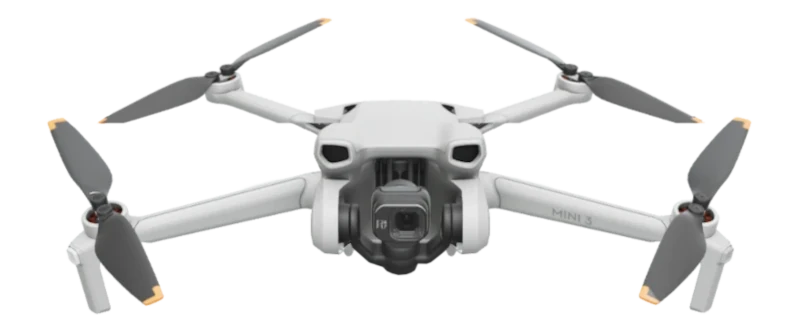
The DJI Mini 3 is the value sweet spot of the modern Mini line: a 1/1.3-inch sensor, 4K/30 fps HDR video, true vertical shooting and 38-minute flight time in a 249 g airframe that does not need US recreational FAA registration. For social-first travel creators it gives almost everything the Mini 3 Pro offers (minus obstacle sensors) for meaningfully less money.
The DJI Mini 3 sits in a deliberately useful gap in DJI's line-up: it inherits the 1/1.3-inch sensor and 4K capture of the Mini 3 Pro, but drops obstacle avoidance and ActiveTrack to land at a much friendlier price. At 249 g it stays under the FAA recreational registration line and the EU's A1 sub-category. That means most hobbyists can fly without paperwork while still recording true 4K footage that holds up on a YouTube channel or in a travel reel. Add genuine vertical shooting from the gimbal (no cropped post-rotation) and it becomes a serious tool for Reels, Shorts and TikTok creators.
The camera pairs a 1/1.3-inch CMOS sensor with a wide f/1.7 lens, the same combination DJI uses on the Mini 3 Pro. Stills are 12 MP standard or 48 MP in high-resolution mode, and video tops out at 4K/30 fps with HDR for cleaner highlights and shadow recovery. The gimbal can rotate the camera 90 degrees for native 9:16 vertical clips, no software cropping required, which is the single biggest reason to pick a Mini 3 over a Mini 2 SE if your audience lives on phones. Low-light performance is genuinely good for a sub-250 g drone thanks to the larger pixel pitch.
Flight time is rated at up to 38 minutes per battery in optimal conditions; in real-world use with light wind, plan on 30 to 33 useful minutes. Top speed in Sport mode is 15 m/s and wind resistance sits at Beaufort Level 5 (about 10.7 m/s), enough for most coastal travel shoots. OcuSync transmission keeps the live feed clean out to 6 km in clear conditions, well past visual line of sight. GNSS uses GPS, BeiDou and Galileo simultaneously for fast lock and reliable Return-to-Home.
One-tap creative tools include QuickShots (Dronie, Helix, Rocket, Circle, Boomerang), Hyperlapse and 180/sphere panoramas. The Mini 3 does not include forward, backward or lateral obstacle sensors and has no ActiveTrack 4.0, those upgrades are reserved for the Mini 3 Pro and above. A downward vision system handles stable hovering and precise landing. Safety features include automatic Return-to-Home on signal loss or low battery, geofencing around airports, and DJI's standard altitude and distance limits configurable in DJI Fly.
The Mini 3 Pro is the obvious upgrade if your budget allows it. The decision usually comes down to autonomy and live-feed needs:
If you fly mostly in open spaces and do not need autonomous tracking, the Mini 3 is the smarter buy. If you film yourself, follow subjects in tight environments or want an extra layer of crash protection, see our full DJI Mini 3 Pro review.
In the United States, the Mini 3 qualifies for the under-250 g recreational exemption at 249 g, so hobby flyers do not have to register the airframe with the FAA. Commercial pilots flying under Part 107 still need a Remote Pilot Certificate regardless of weight, and Remote ID broadcasting is required for most outdoor flights. Earlier Mini 3 units shipped without built-in Remote ID and need an external broadcast module to comply; check your firmware status before flying. Note that the optional Intelligent Flight Battery Plus pushes take-off weight above 250 g, which means you lose the recreational exemption when flying with that pack.
The Mini 3 is the right pick for travel creators who want true 4K and vertical shooting in a sub-250 g body, social-first content makers who upload primarily to Reels, Shorts and TikTok, and second-time pilots upgrading from a Mini 2 SE who do not need autonomous tracking. It is not the right tool for ActiveTrack-heavy run-and-gun content or pilots flying in obstacle-rich environments where you need APAS routing. For those use cases, the Mini 3 Pro or Mini 4 Pro is the better buy.
The DJI Mini 3 is the value sweet spot of DJI's mini line-up in 2026. It gives you the same image pipeline as the Mini 3 Pro at a meaningfully lower price, keeps you under the 250 g FAA threshold, and delivers a 38-minute battery and true vertical shooting that competing budget drones still cannot match. If you do not need obstacle sensing, this is the easiest mini-drone recommendation we make.
For purely recreational flight no FAA registration is required as long as take-off weight stays under 250 g, which the Mini 3 does at 249 g. Commercial flights under FAA Part 107 still require registration regardless of weight, and Remote ID rules apply to most outdoor flights.
DJI rates the Mini 3 at up to 38 minutes per battery in optimal conditions. With the optional Intelligent Flight Battery Plus the rated time grows further but pushes weight above 250 g, so most pilots stick with the standard pack.
The Mini 3 Pro adds tri-directional obstacle sensing, ActiveTrack 4.0, APAS, 4K/60fps and a much better live feed (1080p OcuSync 3+). The Mini 3 keeps the same sensor and 4K/30fps but drops obstacle sensors and the smarter autonomy to hit a lower price.
DJI rates the Mini 3 for Level 5 winds (about 10.7 m/s). It holds position confidently in moderate breezes thanks to its updated airframe, but coastal gusts and alpine downdrafts can still upset such a light drone.
No, the Mini 3 does not include forward, backward or lateral obstacle sensors. It does have a downward vision system for stable hovering and precise landing, so visual flying discipline is required.
Pricing typically runs from around USD 419 for the standard kit (drone-only with the DJI RC-N1 controller) up to about USD 589 for the Fly More Combo with extra batteries and the smart DJI RC controller.
| Name | DJI Mini 3 |
| Gimbal | 3-axis |
| Image Sensor | 1/1.3-inch CMOS |
| FOV | 82.1° |
| Effective Pixels | 48 MP |
| Equivalent Focal Length | 24 mm |
| Aperture | f/1.7 |
| Video Resolution | 4K/30fps |
 | |
| Sensor size | 1/1.3-inch (9.98 x 7.5 mm) |
| Live-Feed | 720p/30fps |
| ISO Range | 100 to 3200 |
| Weight | 249g / 8.8oz |
| Width | 245mm / 9.6-inch |
| Release date | 2022-12-01 |
| Drone Price | USD 419 to 589 |
| Battery | 2453 mAh |
| Max Transmission Distance | 6.0 km (3.73 mi) |
| Wind Speed Resistance | Level 5 |
| Flight Time | 38 min. |
| Max Speed | 15 m/s |
| GNSS | GPS, BeiDou, Galileo |
| Features | QuickShots, Hyperlapse, Vertical Shooting |